Tuesday, 30 July 2024

Multum Gaudium in Castris

I finally got round to reading Beyond A Boundary by CLR James, which will be featured in next week's blog. For now, I've stolen a phrase of his for my latest cricket blog about my fortunes with Tynemouth CC 3s -:

June 15

Tynemouth CC 1s started a busy week with a couple of knock out fixtures. Firstly, they visited Cramlington CC for a Tyneside Charity Bowl quarter final tie. A fairly experimental side posted 160/5, with Freddie Harrison top-scoring with 72*, ably supported by Joel Hull-Denholm (50). Despite looking to have put the tie beyond the home team’s reach, Cramlington knocked off the required runs with 3 balls to spare, mainly on account of an unbeaten 105 by Vihanga Fernando, to win by 4 wickets. Thankfully, there was a more positive result in the NEPL T20 tournament on Friday, away to Shotley Bridge, where Tynemouth secured a trip to Hetton Lyons thanks to Robbie Bowman (44) and Josh Moors (40) starring in an innings of 161/8. Shotley Bridge mustered 142/8, with Freddie Harrison (3/33) catching the eye for Tynemouth.

On Saturday, Castle Eden were the visitors to Preston Avenue, for the first ever fixture between the two teams. The weather had been unsettled in the days leading up to the match and ended up having a major say in its conclusion, but more on that later. Tynemouth skipper Martin Pollard won the toss and asked Castle Eden to bat first. There was one late change to the Tynemouth side with the experienced Andrew Smith coming in for Sean Longstaff who had become a dad overnight. Congratulations to Sean and Ellis on the birth of their son!

Skipper Jonathan Malkin opened up with Benjamin Simpson, but their partnership did not last as Matty Brown had Simpson caught behind by Robbie Bowman without troubling the scorers. Muhaymen Majeed then joined his skipper and the two slowly started to put some runs on the board against the economical seam bowling of Brown, Owen Gourley and Andrew Smith. Brown (3/34) put in quite a shift and his 14 overs included the wickets of Malkin and Keith Bailey. Skipper Pollard brought himself on early this week and he produced a brute of a delivery to dismiss the patient Majeed who was caught off the glove by Matt Brown at slip. With just over a hundred on the board after 30 overs and with 4 wickets down, Pollard introduced his two leg spinners into the attack and Fred Harrison immediately took the wicket of Pakistani Professional Bilawal Iqbal for 6. This was a third catch in the match by Robbie Bowman who was once again impressing behind the stumps. The ball had certainly seamed around a bit and now the leggies found a bit of turn too, making for a good contest between bat and ball; one that Nick Sampson -Barnes was enjoying for the away side. The former Durham Academy player looked solid in defence and attacked anything loose from Harrison and his fellow leggie Josh Moors. Wickets kept coming though and Harrison ended up with four, and Moors with two, but the runs did too with Sampson- Barnes making a fine 64, and Phil Wimpenny a handy 23 before the spin twins cleaned out the tail. A total of 206 all out seemed an above par score on a wicket that was proving to be bowler friendly.

Bilawal Iqbal and Keith Bailey opened up for Castle Eden and produced an excellent and miserly opening spell against Ben Debnam and Stan McAlindon who survived but were put under huge pressure by some fine bowling. Bilawal is not a tall seamer, but he generates decent pace, moves the ball both ways and has great control of line and length. He used the conditions well, as did the left armed Bailey who made the batsmen both play pretty much every ball. Debnam went with the score on 23 and not long after Tynemouth lost 3 quick top order wickets for just 2 runs leaving them in trouble at 45 /4 and behind the clock.  The weather was also closing in. The in-form duo of Matt Brown and Josh Moors decided to play positively and some lovely strokes from both saw the score reach 81/4 off 25 overs when the players left the field for tea. It was during this break that the rain which was forecast arrived delaying the match for around an hour with the game in the balance. Spectators today included former Club Professionals Jonathan Benn and Masood Mirza along with former opening bowler John Callaghan. All three are hoping to return on 29th June for the new Terrace naming ceremony at 1.30 pm. The match that day is against Newcastle, starting at 11.30. All former players and supporters are welcome to attend.

After the rain delay the umpires calculated that Tynemouth would only have a further 13 overs remaining of their innings meaning 38 overs in total. This meant a target of 207 for a win was beyond them but there were still 10 points on offer for a higher run rate in a drawn game. To achieve that Tynemouth needed at least 142 by the end of the 38th over. Hence, 61 needed off 13 overs with 6 wickets in hand. With the reduction in overs, it also meant that the impressive Bailey was bowled out and Bilawal just had 4 left. On the resumption after a quiet couple of overs bowled by Malkin and Bilawal, Moors launched an assault on Malkin. However, Brown was caught in the same over. Joe Snowdon entered the fray and surprisingly Bilawal left it. Moors and Snowdon then put Tynemouth into the driving seat with only 20 runs needed from 7 overs to get the winning draw.

However the game was about to take a dramatic turn as Alan Unsworth came on to bowl and had Moors caught for an aggressive 38. Tynemouth were still favourites, however with Unsworth now accounting for Harrison and Gourley in consecutive balls the game had changed again in favour of the visitors. Bilawal returned and when he had Joe Snowdon caught in the slips, it was left to last pair Andrew Smith and Martin Pollard to negotiate the last 4 overs as the light began to fade. They did this successfully. A game where the winning draw should have been achieved but in fairness it was the visitors who played the better cricket for most of the game and were pressing for a win right to the last ball. Castle Eden’s winning draw was worth 17 points and Tynemouth secured 9 for their efforts leaving them in 4th place in the table.

Tynemouth 2s travelled to Castle Eden and only managed half a game before rain washed proceedings out. Batting first, Tynemouth made 250/7, with Marcus Turner (102) and Chris Fairley (93) scoring most of the runs. The Sunday 3s also saw their game away to Felling rained off at the midpoint. The top of the order, George Stewart (44), Zach Larner (37) and George Bogg (35) were in great touch; sadly, the less said of the 5 successive ducks that followed the better.

Some happy news from the Saturday 3s. A brace of fixtures against Percy Main 2s brought two crushing wins. Firstly, the Dr Tom Barlow Cup saw a visiting Tynemouth side rack up 200/3 from their 20 overs, largely on account of the runs provided by Hamish Swaddle-Scott (78) and Chris Beever (65). In return, Percy Main were dismissed for 36, with skipper Richy Hay (5/5) claiming a hat trick.

 On Saturday, in a league game on the back field, Percy Main batted first and amassed 38, partly on account of 6 dropped catches, one of which denied Ed Snelders his first hat trick since Neville Cardus wrote these reports. However Ed (3/11) would be the first to admit, his performance was eclipsed by a stunning spell by Emily Whiting (4/14), who was almost unplayable throughout her 9-over spell. In reply, the 3s claimed their first win of the season in a shade over 12 overs, to fight off any threat of inclement weather intervening.

I wasn’t included in the cup team, but as I was at work until 6.30, it didn’t particularly matter. Although, you know me; I’d have taken a day’s holiday if required. Instead, I got the call up for Saturday and enjoyed my role as a spectating ambulant, as we got home without too much difficulty. I particularly enjoyed Emily’s bowling. She’s a real talent and it helps to make our club more inclusive that women are playing for the senior teams. The only downside was the cloudburst after our game, which denied us the opportunity of watching the 1s.

June 22

After weeks of wet, cold and cloudy weather the summer finally arrived on Saturday for the first team’s visit to Ropery Lane, Chester Le Street. Home skipper Jacob McCann won the toss and decided to have a bowl first, a decision that proved correct. With Ben Debnam missing it was Marcus Turner who replaced him at the top of the order. This was Turner’s first NEPL Top Division appearance since June 2016, but he’s started the season in great form for the seconds and looked at home straight away. Stan McAlindon was his opening partner, but he was bowled by a lovely off cutter from Liam Simpson for just 3. Robbie Bowman joined Turner and the two had to work hard against swing and seam from Simpson at one end and the craft and accurate spin bowling from Quentin Hughes at the other. They dug in and took the score to 51 when Turner was bowled by Mark Watson for 26.

Robbie Bowman had had a huge let off when he only had 10 on the board when a chip to Andrew Smith at mid-on was somehow spilled, but along with Matthew Brown, he began to play with better timing and more confidence. Brown as ever showed some quality shots and the partnership had reached 77 and the score at 128 when Brown chipped one up to John Coxon at mid-wicket from a half tracker from Ashley Thorpe, a disappointing end to an encouraging partnership.

The game was nicely balanced at lunch at 132 /2, but the session after lunch though went Chester’s way and it was two spinners causing the damage with their accuracy on a wicket that showed a bit of variable bounce. Veteran Thorpe took a smart caught and bowled to dismiss Matt Kimmitt and then Durham Academy left arm spinner, Sebastian Hughes Pinan, who bowled with good rhythm throughout, snuck one through and under the defences of Robbie Bowman for a well-made and patient 67. Josh Moors came in and decided the innings needed some impetus. His 24 off just 16 balls included 2 fours and a maximum, but he was caught and bowled by Hughes Pinan attempting another big hit. It was now time for Thorpe to take over and whilst he will have bowled better spells; this one was good enough for the Tynemouth tail as he took the last four wickets ending with figures of 6/46 from his 12 overs. A final score of 206 all out was a reasonable total but below par. All of the home bowlers performed well, and they were backed up in the field by some fine ground fielding especially some outstanding boundary saves from Cole Pearce.

John Coxon and Jacob McCann opened the innings for the home side and started at a rattle scoring 40 from the first 6 overs from Sean Longstaff and Matty Brown. Longstaff, who has bowled superbly in recent games, struggled a bit with his line and both openers were swift to pounce on anything off target. Congratulations go to Sean and to Ellis on the birth of their son, Brady, this week. Maybe a few sleepless nights were catching up with him? Congratulations also go to Director of Cricket Andrew and Jenny Smith on the birth of their first child, Bertie.

Tynemouth skipper Martin Pollard was doing his best to stem the flow of runs but without success. He tried the medium pace of Josh Koen, off spin from himself and leg spin from Freddie Harrison and Josh Moors but no matter whatever questions he asked Coxon and McCann had the answers. The application of the heavy roller at half time perhaps expunged any variable bounce out of the wicket, and the Tynemouth team didn’t help themselves with a number of dropped catches, but this was a day to admire the batting of the Chester openers who chased down the score without loss and managed to both score undefeated centuries.

On Sunday, in the inaugural NEPL 100 competition that the Banks Salver has become, Tynemouth 1s travelled to Whitburn, with Castle Eden as the third side of a triangular tourney. In the first game, Whitburn (157/5) beat Tynemouth (131/9) by 26 runs. Matty Brown took plaudits for his performances with bat (44) and ball (3/19). In the second game, Tynemouth (152/9) beat Castle Eden (149/6) by the slender margin of 1 wicket. Matty Brown again impressed with the ball, returning 3/19 for the second game running, while Josh Moors (53) was the top batter. Unfortunately Whitburn’s victory over Castle Eden means it is they who go through to the last 8.

Meanwhile Tynemouth 2s hosted Chester le Street 2s at Preston Avenue, where they came out on top after a tremendous run chase. Batting first, the visitors posted an imposing 264/5, dominated by a huge opening partnership of 209 by Matthew Cranston (113) and Ethan Connolly (89). They declared after 46 overs, giving Tynemouth a generous 59 overs to get the runs. In the end, they did it 7 wickets down after 53 overs. Andrew Davison (70) had a good day, following on from his 3/32 in the first innings. However, the star of the show was Joel Hull-Denholm with a blistering 115, though Dan McGee’s unbeaten 45* that saw Tynemouth home also deserves great praise.

The Saturday 3s lost a close quarter final to Bedlington 2s in the Dr Tom Barlow Cup in midweek by the small margin of 6 runs, despite the best efforts of Hamish Swaddle-Scott (66*). On Saturday, it was a trip to the rural idyll of Wark, athwart the North Tyne, to play United Stars, on probably the most unkempt outfield in the league. The home side batted first and, despite the best efforts with the ball of skipper Richy Hay, Emily Whiting, Dom Askins and Ed Snelders, not to mention outstanding fielding displays by young debutants Ollie Coates (a breathtaking catch, followed by a calm run out) and Charlie Hall, registered 202/9. It seemed a big ask, and so it proved, as Tynemouth mustered 55 all out, despite the best efforts of Ewan Aditjandra (13), Emily Whiting (11) and the master of the late cut, Ollie Coates (10), not to mention ian cusack (1*), whose elegant cameo at the end of the innings featured a glorious shot through extra cover.

I’ve been to Wark twice before. Firstly, with football, as Percy Main gamely battled to a 7-2 howking by the once impressive but not sadly defunct home side. It was the end of January for that, but almost tropical compared to the first Saturday of the cricket season last year. We only had 10, but I still didn’t bat or bowl on a day so perishing that we all used those packet handwarmers to keep Raynaud’s Phenomenon at bay.  This game was played in pleasant sunshine, without the incessant baying of lambs at long off and cows at deep square, but a few home umpiring decisions knocked the stuffing out of us. When batting, I may have been stumped first ball, but Richy at square leg saw nothing in it, so consequently I managed my first run of the season and another unbeaten knock. All about the red inkers at this level…

June 29

The last Saturday in June saw a wonderful day’s cricket at Preston Avenue. In front of a large and expectant crowd, Tynemouth (304/7) comprehensively trounced Newcastle (202 all out) by the handsome margin of 102 runs. Not only that, but those in attendance were privileged to see the naming ceremony for the Duncan Nisbet Terrace, which continues the club’s progression off the field. On it, things are going swimmingly as well.

Batting first, Tynemouth compiled 304/7 from 53 overs. This impressive total was largely due to Josh Moors (100) completing his second NEPL century of the season, from only 53 balls. It contained 12 boundaries and 4 maximums. Stan McAlindon (84) played a vital, more restrained role, while Robbie Bowman (32) and Matt Brown (31) played with stylish abandon. In response, Asher Hart (79) led the response, ably supported by Bobby Green (30), Ben Robinson (27) and the evergreen Jacques Du Toit (27). At 135/2, Newcastle seemed on course for victory, but the introduction of Tynemouth’s spinners proved crucial. Skipper Martin Pollard (2/42) began the fightback, before Freddy Harrison (4/43) and Josh Moors (3/31) secured the win. Newcastle collapsed from 196/5 at tea to 202 all out, underlining the superb efforts of the home side.

In the reverse fixture, Tynemouth 2s ground out a rugged losing draw away to Newcastle 2s. Bowling first, Tynemouth’s new fathers, Andrew Smith (1/39) and Sean Longstaff (1/47), had some success during a difficult afternoon in the field for the visitors. Newcastle posted an impressive 263/3 from 55 overs. In return, Tynemouth secured a losing draw, by amassing a gritty 232/9 from 50 overs. Joe Snowdon (102) was the top scorer and Patrick Hallam (45) provided solid support, though almost all batters dug in to avoid defeat.

Tynemouth Saturday 3s also avoided defeat, as they were the odd team out in their 13-team division. The Sunday 3s won by 10 runs against Ashington Academy. Batting first, the total of 189/5 was largely down to Joel Hull-Denholm (73*) and Ewan Aditjandra (30*), though Shams Oraikhil (27), George Stewart (26) and George Bogg (25) also played their parts. In response, Ashington closed on 179/8, with wickets (almost) shared between all 9 bowlers used.

The Sunday previous, Tynemouth Women’s softball teams, Gems and Willows, hosted Matfen and Warkworth. It was a day of glorious sunshine and a lovely atmosphere. Gems were playing on the back pitch against Matfen and continued their winning streak, scoring 70 runs to Matfens 42. Unfortunately, on the main square Warkworth beat Willows in a tight fought game losing by 77 runs to 84.

A free weekend meant glorious weather, predictably enough. Shelley and I, after a busy day at the gym and collecting my famous new Telecaster from Little Richard’s mam, had a few scoops and watching 1s win in great style. All in all; a decent day out.

July 6

The first Saturday of July was a frustrating one for Tynemouth Cricket Club, with two fixtures washed out and one conceded. The first XI hosted Burnmoor, with rain causing the cancellation of the game at lunch. This was a fortuitous turn of events as the visitors had, at one stage, reduced Tynemouth to 61/7. However, an unbroken partnership of 53 by Matthew Kimmitt (37*) and Barry Stewart (27*) saw Tynemouth progress to 114/7 when the weather intervened.

Tynemouth 2s travelled to Hetton Lyons, where the home side had reached 169/4 when the rain arrived. The outstanding Tynemouth bowler was Emily Whiting, promoted on the back of some superb performances for the 3s. In this game, she returned figures of 3/39, showing the quality she possesses. On Friday, the 2s had played an NEPL T20 group game away to Sunderland. This curious melange of players, including sprightly 59-year-old debutant ian cusack, batted first and amassed 145/6. Dan McGee (74) lead the charge, with support from Patrick Hallam (36) and George Stewart (14). Sunderland chased down the runs with 2 overs to spare, despite the best efforts of McGee (2/21) and a tidy spell by Lewis Hurst (1/14).

Unfortunately, the Saturday 3s, having seen several certain starters called up to the 2s, were unable to raise a team and so conceded their away fixture to Stamfordham. The Sunday 3s were also victims of the weather. They batted first against Whitburn, posting 177/5 from 35 overs with George Stewart (51) and Patrick Hallam (31), but a potentially close game ended with Whitburn on 50/1. Let’s hope for better weather next week.

The 3s were struggling to field a team from the get-go and, with only 6 certainties on Thursday, Richy bowed to the inevitable and conceded. This was a great shame for a number of reasons. Firstly, it’s always lousy when the numbers won’t add up. Secondly, we could have done with the points (and in the end, we’d probably have got 5 for the inevitable abandonment). Thirdly, I’ve never played at Stamfordham so fancied another ground to tick off. Therefore, Saturday meant Shelley and I could go and watch Percy Main v Marske United, though I did manage some cricket as well.
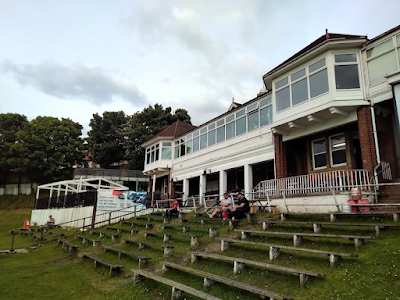

Waking up on the sofa, drunk and delirious after the Labour landslide, it became clear that I’d somehow agreed to play for the 2s in a T20 game at Sunderland on the Friday night. The reality of this and the shocking state of intoxication I’d found myself in meant a difficult day of painkillers, dozing and hi-carb food, before I was able to make my way, via a lift, to the beautiful, if slightly decaying, surroundings of Ashbrooke. Wearing Benno’s (unwashed) kit, I thankfully wasn’t required to bat and when fielding, spent most of their innings hiding out at square leg. We lost but didn’t do too badly and I can now say I’ve played for all 3 senior sides at TCC.

July 13

I was in the side due to host GEMS 2s, but as the back garden resembled a lake first thing, it was no surprise the game was called off. Instead, Shelley and I took in Percy Main v North Shields in the Gary Hull Memorial Trophy.

July 20

After the complete washout that was Saturday 13th July, Tynemouth Cricket Club enjoyed a clean slate of victories the week after. The first XI travelled to Hexham to take on Tynedale, returning with an emphatic 8-wicket victory, having skittled the home side for 125. Aussie Josh Moors was the star of the show, returning figures of 12-2-34-6. Tynemouth knocked off the runs in a shade under 23 overs, largely due to Matthew Kimmitt’s unbeaten 82.

Tynemouth 2s had been active, in between last week’s rain showers. Friday 12th July saw them defeat Hetton Lyons in an NEPL T20 group game. The visitors batted first and made 127/6, with Andrew Davison’s 2/21 an important feature in restricting the total. In response, Tynemouth won by 8 wickets, with Patrick Hallam (43*), Joel Hull-Denholm (35) and veteran, interim Chair Andrew Lineham (33*) getting the side home. On Wednesday 17th July, the 2s progressed in the Roseworth Trophy with a 9 wicket win over Lanchester. The visitors batted first and made 101/7, with bowling plaudits going to Lewis Hurst (3/19) and Dom Askins (3/20). In response, Joel Hull-Denholm (60*) and the ageless, interim Chair Andrew Lineham (21*) made the victory a racing certainty.

On Saturday 20th July, Tynemouth 2s posted 222/8 declared against Whitburn at Preston Avenue. Marcus Turner (116) lead the way, with support from Dan McGee (36), the similarly named but unrelated Anthony Turner (27) and the unbeatable, mature interim Chair Andrew David Lineham (11*). In response, Whitburn were dismissed for 175, mainly because of the efforts of Richy Hay (3/12), Neil Bennett (3/42) and Andrew Smith (2/19), who is now Tynemouth’s record wicket taker of the Play Cricket era.

Even better news came from the Saturday 3s, who beat Blaydon by 51 runs.  Strengthened by the absence of ian cusack, Tynemouth batted first and posted 109 all out. Top scorer Vishaal Goel (32) was helped out by the club’s most prominent processed pork addict Dan Watt (12), who had an even better time with the ball. His 7-0-20-5 was absolutely vital in securing the victory, though Ed Snelders (6-2-9-3) also played an important part in dismissing Blaydon for 58.

The cherry on the cake was provided by the Sunday 3s, who saw off Burnopfield by 6 wickets. The visitors batted first and were bowled out for 186. Wickets were shared around all 7 bowlers, but the runs to see Tynemouth home came mainly from Patrick Hallam (71*) and George Stewart (54). Well done to all teams!!

As those of you who read these things with have noted, I was at Arbroath 0 Annan Athletic 3 on this particular Saturday, so the report was compiled from the stats on Play Cricket.

July 27

Yet again, lousy weather conspired against Tynemouth, with home fixtures against Sunderland for the 1s and Annfield Plain 2s for the Saturday 3s, abandoned before a meaningful result was established. On the front pitch, Tynemouth 1s batted first and made 91/3 from 21 overs, before rain ended proceedings. On the back pitch, the 3s, including 7 players under the age of 16, expertly skippered by Rohan George, bowled against Annfield Plain. The visitors were 103/3 when regular showers began a raging monsoon. Credit must go to both George Bogg (2/19) and Rohan George (1/28 from 9 overs) for their efforts with the ball; not so much to ian cusack though, whose final over saw the game grind to an unsatisfactory halt.

In contrast, Tynemouth 2s made short work of their trip to Sacriston 2s, winning by 6 wickets. The home side were dismissed for 129 in 40 overs, mainly due to the efforts of Josh Koen (4/16) and Andrew Smith (3/10). The runs required were chased down in 25 overs, with top scorer Andrew Linehan (32*) continuing his impersonation of Don Bradman in 1930, ably supported by Patrick Hallam (28) and Dom Askins (27*) who, with a wicket in the first innings, continues to impress at this level. Sadly, the 2s had less luck in their Banks Bowl 100 qualifying group on Sunday, losing to both Whitburn and Lanchester, bowing out of the competition in the process.

This is always the toughest weekend of the season for the 3s. Two years ago, we had a team that consisted of me, Ed and 9 embryos. On that day, Newcastle racked up 240 and skittled us for 24. It was brutal, bruising stuff. Last year, I had to captain us against Leadgate. We only had 3 bowlers and 2 bairns, who weren’t that much cop to be honest. Again, Leadgate got almost 250 and we were obliterated for 29. I headed home straight afterwards for a soak in a hot tub, the water cooled and diluted by my salt tears of rage and shame. So, to this year and the visit of Annfield Plain 2s. We’d lost a great game to them on a sunny May afternoon at Enterprise Park. They’re a team I have great respect for and I felt desperately sorry for what turned out to be their wasted journey.

With Richy, Dom and Strez all moved up to the 2s, we were 27 overs down. Rohan, who captained, could bowl 9 and I was scheduled to bowl a few (4 in the end), while the rest of the overs had to come from among 6 of the 7 under 16s who made up the team. The two dads who were helping out didn’t bowl and the other youngster was our 12-year-old keeper. Yup, Tynemouth CC is nothing but inclusive. I tell you what, despite rain ruining the contest and probably stopping us from losing, this was one hell of an enjoyable day out. Alright, so the noon cloudburst put us behind schedule and meant we only got going once Rohan and I had mopped up the excess water from the covers, but these kids were enthusiastic, sharp in the field and truly committed. Young George Bogg bowled at a hell of a lick and deserved his 2 wickets, while the older McAvelia brother bowled some lovely left arm spin.

Ironically, the minute I had the ball in my hand for the 20th over, the rain came down and we lost another 30 minutes play. At this point, thoughts of reducing the overs appeared academic as the forecast was so dreadful. All we could do was hope to get on so both teams could earn a few points. We came back and I ended up bowling 4 overs for 23. One of their batsmen almost played on in my first over and then, with the last ball of the game, he spooned it up almost to square leg, but I think the fact the ball had squirted out my hand like the proverbial bar of soap had been enough to persuade the captains to shake hands before it even landed. One thing I learned from this spell is to stop overthinking my bowling. I had a typically attacking field, with long on, long off, cow and deep square. My stock ball being the hip high full toss outside leg stump, the latter position came into play. Unfortunately, the batter clubbed me for six, the ball going about 3 feet over the fielder’s head. Two balls later, I decided to flight one up, certain he’d pick out either long on or long off. My instinct on the distance he’d hit was perfect, though he neatly bisected the two of them for a one bounce boundary. So much for theory, eh?

Anyway, game abandoned at half three and the same story on the front pitch. I had a quick coffee in the pavilion and waited for the rain to ease. In fact, it stopped, the sun came out and I had to wear sunglasses as I wandered for the bus, contemplating the fact we’ve had 8 games rained off this season. I hope it stays nice on August 10th for my birthday party.


Tuesday, 23 July 2024

The Devastation of Arbroath

It’s hard work this groundhopping lark, you do realise. Once you’ve factored in a 24-week cricket season, including the usual 8 abandonments for the weather, and 30 Northern Alliance games for Percy Main Amateurs (no floodlights meaning midweek games only possible in August, April and May), there aren’t a huge number of spare Saturdays left to go round. However, if you’re approaching 60 years of age and are determined to do the full 42 Scottish set, then a bit of thought and some proper planning is required so you can make inroads into the obscure and, as yet, unvisited Caledonian wastelands.

Following trips to: Bonnyrigg Rose, Dundee, East Fife and Kelty Hearts, I had managed to tick off 30 SPFL grounds by the start of 2024/2025 season. Of the dozen remaining, only one is in the West, the almost inaccessible outlier of Stranraer. As a non-driver from Newcastle, the only hope I’ve got for visiting Stair Park is Keir Starmer’s investment policy for the railways to include the reopening of the Carlisle to Stranraer line that Dr Beeching axed the year after I was born. Looking to the East and North, the remaining 11 targets split nicely into those than can be done in a day (Arbroath, Dundee United, Forfar, Montrose and St Johnstone) that are in the Tayside and Angus region, and the half dozen up in the Highlands that require an overnight stay (Aberdeen, Cove Rangers, Elgin City, Inverness Caledonian Thistle, Peterhead and Ross County). Unexpectedly, circumstances presented me with a spare Saturday in mid-July (Tynemouth CC 3s being without a game and Percy Main opting to train rather than search for friendly opposition), thus the Scottish League Cup group stages offered me and my pal Big Gary a chance to take the High Road.

Having checked the fixtures, Arbroath v Annan Athletic stood out, because I’d heard so many good things about the ground, as well as the fact the train times were favourable. Both Dundee United and Forfar were also at home, but a 5.15 kick off at Tannadice ruled that one out, as did the thought of a bus trip from Dundee to Forfar’s anachronistically named Station Park (curse you Dr Beeching!!), so Gayfield Park, site of Arbroath’s famous 36-0 win over Bon Accord in 1885, it had to be.

We left Newcastle at about 9.45 on a pretty packed train; the usual day tripping bevvy merchants and glamorous grannies mainlining Prosecco were augmented by a sizeable number of Man United and Rangers replica shirt clad Christmas Trees, prised from their sofas because of the number of tickets available for a pre-season “friendly,” if there could be such a thing between those clubs, taking place at Murrayfield (capacity 67,144). The second train, from Edinburgh heading north was considerably less populated, though Scot Rail’s abridged summer timetable probably accounted for more bums on less seats. It was a pretty journey up, across the firths of Forth and Tay, through the Kingdom of Fife, past Raith Rovers ground, close to Broughty Ferry where Scotland were playing Namibia in a 50-over game (they won by 6 wickets), up past Carnoustie and into Arbroath by 12.58, where the smell of the sea is refreshingly overpowering from the moment you step on the platform.


We were in the West Port Hotel by 12.59 and out again by ten past, returning to collect my forgotten phone almost immediately afterwards. It seemed a decent, well-presented semi trendy spot that advertised its support for the Red Lichties, though the most interesting thing about the place was the hair-raising array of sex toys available from a vending machine in the bogs. No, I didn’t sample the wares. I stuck to the beer. As is the case in such off the beaten track locations, there’s no point in trying to sample an elite range of craft ales; Scotland drinks Tennent’s and on a warm, cloudy Saturday afternoon in July you have to go with the flow. Especially if you’ve not had a beer all week.


Arbroath’s main drag is a gently sloping, slightly curved and not unpleasant high street, boasting an artisanal cheese shop and several takeaways, which were all closed, denying us the chance to sample the local delicacy of a smokie. Still, we had been advised as to the quality of the pies at the ground, so we stuck to a liquid diet. Second pub, The Anchor, saw Gary (just turned 55) as the youngest customer in there. Quite why the jukebox was blaring out Whigfield’s Saturday Night (at 1.15 in the afternoon) loud enough for it to be a Swans or Rammstein tribute band, is beyond me. As was the fact every pub, and I mean every pub, we went into played Creedence Clearwater Revival; Proud Mary, Bad Moon Rising and Have You Ever Seen the Rain? all got outings as we kept on chooglin’ pints into us.


Historically, Arbroath is most famous for the 1320 Declaration of Arbroath, which was a two fingered salute to English hegemony. That all seems rather sad after the evisceration of the SNP in the recent election that effectively means calls for a chicken in every pot and a stolen motor home on every drive have been silenced forever, even if the locals did return an SNP representative to Westminster on July 4th. Then again, if the habitues of Bar 1320 are representative of the local electorate, you wonder if universal suffrage is a good idea. The barmaid, who had confidently announced that Annan was “just outside Glasgow,” was attempting to teach a bladdered bon vivant in a Celtic shirt, how to play dominoes. It was a concept too challenging for his cerebral cortex, to say the least. Quite a few old soaks in The Anchor were clearly heading to the game and several more, including the Annan contingent of whacky English HMHB style fans, in Bar 1320 looked likely to be heading there as well. In fact, I saw 3 of the local Man at C&A summer casuals leaving the ground at half time…


Before then, we hit our final pre match refreshment stop, The Foundry Bar. I’ve heard legend that this is a popular pit stop for busloads of Aberdeen fans en route to Dundee United, mainly so they can blast out that old Billy Fury classic, Halfway to Tannadice. Makes a change from Born on the Bayou or Run Through the Jungle I suppose. Anyway, the barmaid clocked our accents, said how much she liked Newcastle and gave us happy hour double Black Bottles to go with the compulsory Tennent’s. By now it was 2.45 and I needed a sleep more than more beer, so we went to the ground.

The entrance was 100 yards away and I found myself immediately behind SPFL Chief Executive Neil Doncaster in the queue to get in. He’s not as tall as you’d think and of course I said hello, but I spent more energy on savouring the exquisite steak and black pudding pie than on any chat with him. Divine moist chunks of meat in a thick, peppery gravy with a storming base layer of viscous, gritty black pudding. I could have had half a dozen but restricted myself to one.

Gayfield Park in a brilliant ground. You come in on the same side as the Main Stand, that covers about half of one touchline. Either end sees uncovered terracing give way to a covered shed, which home fans migrate from end to the other at half time. The far side is a covered shed, with uncovered terracing, that must be about 50 feet from the North Sea. Next stop; Norway. The beachside path has more camper vans parked on it than Dunfermline cop shop after a Polis visit to Peter Murrell’s mother. Seriously, this place is up there with all my favourite ramshackle old Scottish grounds. The only bad part about the day was the game, as the home side turned in a performance as woeful as any I’ve seen in the last few seasons.

Gary and I had seen Annan, big, strong and predominantly Cumbrian or even Lancastrian going by the players’ accents, steal a draw in a dismal 1-1 at Kelty back in January, but from the very start, there was only going to be one winner. Annan have improved rapidly, and Arbroath look in danger of a second successive tumble, if this is to be indicative of Scottish League 1 in the coming 9 months. In the Scottish League Cup, the 5 European qualifiers are exempted until the first knockout round (of 16), which the remaining 37 teams are split into 8 groups of 5, with Brechin City, Buckie Thistle, East Kilbride from the non-league ranks. The 8 group winners and 3 best runners-up get the chance to have their arses handed to them by Celtic’s reserves at a half full Parkhead as a reward. Arbroath, recently relegated from the Scottish Championship to League 1, had begun their campaign in fine style, with a 2-0 home loss to Dundee, while Annan had seen off Big Dunc’s Inverness CT 1-0 at home before drawing 1-1 with Bonnyrigg. In such circumstances, there is a penalty shoot out and the winners take 2 points and Annan had done just that.

We had our fingers crossed that there would be no penalty shoot-out to delay us, though we needn’t have worried as I don’t believe Arbroath tested the Annan keeper all game. The opener came on the half hour, when towering Tommy Goss planted an unstoppable header in the Arbroath net. Worse was to come when the home side’s Scott Stewart saw red on 42 minutes for a horrible, over the top, ankle breaker. Arbroath never recovered and Josh Dixon sealed the win with an explosive effort from 20 yards. We called it a day as the haar from the sea was turning to rain, just missing the final goal when Josh Todd waltzed through a static home defence deep into injury time. You can watch it on YouTube. We did on our phones, after buying a carry out for the train and grabbing a last pint in The Station Bar, which boasted some forthcoming entertainment; “indie classics tonight from star vocalist Iain Brown.” Presumably backed by The Stonehaven Roses…

Anyway, many cans of G&T later, punctuated by a pit stop in Edinburgh’s best pub The Guildford in something of a monsoon, I was poured out of a taxi around 10.30 and guided quickly to bed. What a brilliant day. I’d even bought a 4 pack of Tennent’s and an Arbroath fridge magnet for Shelley, as I’m all heart. So, what happens next? Well, the cricket season ends on September 21st, but there’s engineering works on the Newcastle to Edinburgh section around then, so it looks as if October 26th is my next feasible date for a day out, with Montrose versus Cove Rangers my intended location. Travelling by train isn’t cheap, but the fact I can avail myself of an Over 60s railcard from August 11th onwards does sweeten the pill somewhat.

Tuesday, 16 July 2024

Mystery of Spain

The 2024 European Championships dissected...

Mystery of Spain: In a secret garden, a girl gets screwed up the ass. Later, on a lonely road, a couple have problems with their car. The girl invites them back to her castle and offers them champagne, strawberries and plenty of double penetration...

Like every major international tournament, I began my consumption of it with a cynical, nay jaundiced, view over proceedings that was soon replaced by support for the underdogs, contempt for the prima donna popinjays and a level of furious engagement with the latter stages that borders on the obsessional. During the 2024 Euros, I discovered a level of affection for Austria, Georgia and Turkey that I’d not been conscious of in the past. Such support for the little guys was subsequently overtaken by a profound admiration for a Spanish side that effortlessly negotiated a smooth passage to a wholly justified triumph over a late blooming England side that almost threw off the shackles of dismally cautious non-football that had besmirched their first 4 games in Germany.

Meanwhile Scotland, who finished dead last in terms of goal difference and points gained, were a stain on the whole tournament. Not just because of the fact Clarke’s side were abject on the pitch, or because of his ungracious, racist rant about the Argentinian referee in their final game against Hungary, but because of the sickening, chauvinistic posturing of a section of their support. These anti-democratic thugs, unable to accept the fact that the electorate had decisively rejected the ultra-nationalist hate speech of the Scotch Nazi Party, fell back on Francoist, anti-English rhetoric and thus shamed their whole region. Wannabe Fuhrer John Swinney has much to answer for. A chicken in every pot and a stolen motor home on every driveway, my arse!

Over the course of 31 days, we saw 51 games, in which there were 117 goals. The tournament, which began on Friday 14 June, seemed to go on forever. I missed the first game (Germany 5 Scotland 1) as that was the night of my infamous Blyth gig (https://payaso-de-mierda.blogspot.com/2024/06/blyth-dispirited.html) and the first two on the Saturday (Hungary 1 Switzerland 3 and Croatia 0 Spain 3) as I was playing cricket, though I made it back for Albania 1 Italy 2, with its explosive opening that saw the Tirana tyros take the lead in 27 seconds. The rest of the first half was compelling viewing, with Italy producing their only decent football of the whole tournament to fight back. A soporific second period saw them revert to type and indicated that the current holders of the trophy would not be contenders for this year’s competition.

Sunday 16 June saw me continuing with a laissez faire attitude to events in Germany. We were out shopping for a new bed for the spare room, so I didn’t get to see much of Netherlands 2 Poland 1 or Denmark 1 Slovenia 1, other than the goals. It was nice to see Christian Eriksen playing such a prominent role, 3 years after his terrible collapse during the last Euros. Talking about a terrible collapse, England 1 Serbia 0 began in exciting fashion, with Saka and Bellingham enjoying a blistering opening half an hour, before regressing to a hopeless waste of time after the break. England’s timid second half withdrawal was seen most clearly in the non-performances of Foden, Rice and Alexander-Arnold who were dire all evening. Connor Gallagher proved himself to be a zero-trick pony, whose default tactic is to chase after the ball like a frantic Jack Russell pursuing a paper bag on a breezy day down the park. He might show a bit of urgent energy, but at the end of the day, such a performance in international football is about as effective as playing Jarrod Bowen at right back, which Southgate did.

On the Monday, and this will become a regular theme, I missed Romania 3 Ukraine 0 and Belgium 0 Slovakia 1 because I was at work and then playing 6-a-side. Despite two years in the Slovak capital of Bratislava, at the turn of the millennium, I’ve no real affection or connection with the current side, as none of them were playing (or in several instances, born) when I used to cheer on Petrzalka at Stary Most. In fact, other than Dubravka, I’m not sure I’ve heard of any of their squad. The last game of the day, Austria 0 France 1, was dull to the point of sterility, which is just how Deschamps likes it. France, even more than England, insist on playing with the handbrake on, in all possible circumstances. Frankly, the only enjoyable part of the whole game was seeing Mbappe’s nose expanding across his entire face, to give him a bugle as big as his ego. Those of us who remember Carlos Bilardo could laugh and smile.

Tuesday 18 June saw the first brilliant game of the tournament; Georgia 1 Turkey 3. Of course I missed it, partly while I was still at work and then while I was cycling home. I got back in time for Czech Republic 1 Portugal 2, unfortunately, as two of the biggest twats ever to play football since Samir Nasri retired (Bruno Fernandes and Ronaldo, as if you needed to ask), somehow came out on top courtesy of Primary School defending in a game that stunk the place out for the opening 75 minutes and more. At full time, every team had played at least once and, of the 34 goals scored, I’d managed to see 8 of them live.

I missed another 4 in the opening game on Wednesday 19 June; Albania 2 Croatia 2 was a cracker by all accounts, typically enough. I quite enjoyed Germany 2 Hungary 0 as the hosts oscillated between efficiency and entertainment, showing they’ve possibly got their mojo back after a decade in the wilderness. The day ended with Scotland 1 Switzerland 1. The Jocks are rapidly becoming a kind of international version of the Mackems, revelling in the discomfort of their local rivals rather than pretending to support their own team. In many ways, aided by Schar’s bizarre own goal, they didn’t play too badly, but I would still have been punching the air in delight if they’d got bounced out at this early stage.

Work can be good for some things, avoiding Serbia 1 Slovenia 1 for instance. Mind that was a classic compared to Denmark 1 England 1. After taking the lead, England gave up and by half time Shearer and the panel were tearing strips off Southgate’s side. Kane appeared to be suffering from narcolepsy and Southgate had Bellingham playing like Des Hamilton. Must have been one hell of a half time talk, as they were worse after the break. An utterly abject performance, mirrored by Italy’s incompetence as Spain toyed with them in a 1-0 victory in the late game. I didn’t see this, as Ben and I were at the Peony TQ gig at The Globe. Quality band. Check them out.

On Friday, Shelley and I were privileged to attend Lewis’s leavers’ assembly and barbecue. As it was such an honour to be there, on a glorious sunny afternoon I had no compunction about missing Slovakia 1 Ukraine 2 and Austria 3 Poland 1, though catching up on the highlights later, Austria looked tremendous. I got back in time for the charade that was France 0 Netherlands 0. After VAR had worked so perfectly in the tournament thus far, it took the intervention of the Premier League to make things go tits up. Taylor and Attwell’s imbecilic decision to chalk off a perfectly legitimate Dutch goal showed that England was the only country to have worse officials than their team at the Euros.

Saturday gave us Belgium 2 Romania 0, Czech Republic 1 Georgia 1, and Portugal 3 Turkey 0. I didn’t see a ball kicked as I was cricketing up in Wark (1* courtesy of an elegant drive past extra cover) and then imbibing with Chloe as she was home from university for the weekend. Thus, with all teams having played twice, I’d managed to see 12 of the 61 goals scored.

So, into the final series of group games. I don’t think the Euros should include 24 teams. My preference would be for 16, as allowing teams who finish third a 66% chance of getting to the knockout stages seems to both devalue the quality and needlessly extended the length of the tournament. Of course, sporting considerations fall far below economic ones for UEFA, who regard selling TV rights and advertising spots of prime importance, even when the whole event takes place during German monsoon season on pitches you’d struggle to find in the Northern Alliance.

Talking of alliances, Scotland had played their first game in Berlin, spiritual home of the Scotch Nazi Party, then cosied up to the masters of Tartan gold storage, Switzerland, before playing against the country that is ruled by John Swinney’s ideological bedfellow Viktor Orban, Hungary. Bereft of ideas and without a shot offered in anger, Scotland limped out of the tournament unmourned by all of us who love football. Their atrocious fans would not be a miss either, though worst of all was Steve Clarke’s bitter, xenophobic rant about the Argentine referee that bordered on the racist. How ironic, when his countrymen have spent 38 years revelling in Maradona’s handball that they should have complaints about one of his own, even though the referee was spot on in his decisions. Meanwhile, Germany and Switzerland drew 1-1, seeing both teams go through.

On Monday 24 June, I opted out of Albania 0 Spain 1, as the Spaniards had already qualified, to watch Croatia 1 Italy 1. Until that late thunderbolt of an equaliser, Italy had looked as bereft and clueless as Scotland or England. Even then, such is the nature of the draw that Switzerland looked better equipped to advance to the quarter finals. I’ve no real affection for Croatia either, other than as a holiday destination, mainly because Modric could give Ronaldo a run for his money in the narcissism stakes. It was nice to see such a messianic pillock end his career in such dire circumstances.

Tuesday 25 June offered a double header of knockout football. Sadly, being at work until 18.30 and then needing to cycle the 5 miles home, I missed Austria 3 Netherlands 2 and France 1 Albania 1, whereby only the latter country didn’t make it to the knockout stage. Instead, I pedalled furiously to get back in plenty of time for Denmark 0 Serbia 0 and England 0 Slovenia 0. Do I really need to tell you this was an absolute load of steaming horseshit? Or that is was even worse than the earlier games as Southgate’s idiotic tactics and imbecilic team selections conspired to make this the absolute nadir of the whole tournament. Anthony Gordon arrived on the pitch with 88:45 on the clock and did more in 3 minutes than Foden did in 3 games. I bet the other game was a classic as well.

Wednesday saw me plump for Slovakia 1 Romania 1 in preference to Belgium 0 Ukraine 0. It wasn’t a great game, but the second half thunderstorm was a brilliant spectacle. I’m glad Ukraine went out for ideological reasons, of course. The final group games were an awful lot of fun; Georgia 2 Portugal 0 gave the best moments of the tournament so far, with Ronaldo pouting his way around the pitch, showing off a slapped arse face. The Czech Republic 1 Turkey 2 game also looked a tasty spectacle, with 16 booked and 2 sent off, as the ref had some kind of hissy fit, and the game ended in the kind of square go you’d normally associate with a taxi rank on Christmas Eve. Shame there were only 81 goals in 36 games mind.

After a relentless schedule in the group stages, we were blessed with two rest days before the last 16 games began on Saturday 29 June. First up Switzerland cuffed Italy aside 2-0, before Germany breezed past Denmark with the same score. I sort of caught bits of both games as we were watching Tynemouth 1s dismantle Newcastle 1s by over 100 runs, not to mention an earlier trip to the gym and collecting a gifted Telecaster (thanks Richard!). It made for a busy day, despite the fact Tynemouth 3s were without a game. No surprise Italy went out, but the Germany v Denmark encounter featured another Stuart Attwell disaster, incorrectly denying Denmark at one end and harshly penalising them at the other within the space of 30 seconds. There was also a superb thunderstorm that took the players off the pitch as the lightning flashed insanely overhead.

On Sunday 30 June, the eventual finalists came through their first sudden death games; one with slightly more style than the other, it has to be said. After 93 minutes, Slovakia led England 1-0, in a game that made the loss to Iceland in 2016 seem a good workout in comparison. Then Bellingham, with an attitude grounded in the arrogant entitlement only sons of coppers and players for Franco’s XI could have, scored an amazing equaliser to take it to extra time. In our excitement, Shelley and I looked away for a few minutes and somehow missed Kane’s goal. From then on, there was only one winner as Slovakia had no response to give, but it truly is baffling quite why England, with the array of attacking talent they have, are so infuriatingly timid when it comes to tournament football. Being honest, Slovakia were as dull and limited as Slovenia before them, but a silly collision gifted them a goal. The fact England scraped through to the last 8 will be seen by Southgate as justifying his miserable methods. Contrast this with the unbidden joy of Georgia 1 Spain 4. After going a goal down, Spain shrugged misfortune away and battered Georgia, who never gave up, whatever the score. The result was a great game that put a smile rather than a grimace on your face.

Into July and Monday gave us a pair of brutal non-events; Belgium 0 France 1 and Portugal 0 Slovenia 0. Played football and missed the first and then kept my fingers crossed for Slovenia. When Ronaldo missed from the spot, I mused that with him and Modric retiring, thank goodness there is Bellingham to step up to the plate in the role of messianic self-appointed football genius. Remind me; what club do they all have in common? Anyway, the pampered prick lived to fight another day, courtesy of his keeper’s shoot-out heroics, showing Slovenia know how to defend, but don’t know how to attack.

A late finish at work, meant the usual Tuesday classic early game, as the Netherlands hit their stride, banjoing Romania 3-0. I’ve had a soft spot for the Dutch since the 1974 World Cup, so I was pleased. Even more pleased I got back for the game of the tournament; Austria 1 Turkey 2. The other 2 best attacking sides of the tournament, bar Spain and Georgia, went at it hammer and tongs from the first whistle. Mad goals. Crazy scrambles. Heroic defending on a saturated pitch. This was proper football and it brough up exactly 100 goals in the competition as we marked the end of the Tories with 2 days off before the quarter finals.

I love General Election nights and I was up all night watching the Tories getting their arses handed to them. Awakening at 8.45 on the sofa, I found I’d somehow agreed to turn out for Tynemouth 2s in a T20 cup game away to Sunderland 2s that evening. As I felt like death, this did not initially appeal. However, I pulled myself round and, although we got beat by 6 wickets, I enjoyed it. On reflection though, I am not sure I should have missed a game as pivotal as Spain knocking out the hosts, especially as NUFC legend Mikel Merino got the winner. I got back home for the extra time and penalties of the rancid rubbish that was France 0 Portugal 0. I truly despised the approach of both teams and only my contempt for Ronaldo made me stick with it until the end.

The rain came down on Saturday morning, meaning Tynemouth 3s trip to Stamfordham was called off. A serious gym session and a sobering afternoon at Percy Main 0 Marske United 6 set me up for England 1 Switzerland 1. This was a slight upgrade in performance, but not a massive one. Despite the superb set of penalties, I didn’t really buy into the sudden uptick in social media applause for Southgate’s timid tactics, though I think they deserved to win. As the whole week had been upside down, we headed off to Tesco to do the week’s shop after this game and missed Netherlands 2 Turkey 1. Frankly, I’m not really sure I’d want to be in a supermarket at 9.30 on a Saturday night ever again.

Another couple of days relaxation before the real business end of the tournament. Spain again proved that they are the best team in Germany and, probably, between than their 2012 iteration that blitzed Italy 4-0 in the final, when beating France 2-1. Despite going a goal down, they showed style and ruthless self-belief in battering the French down. They scored two of the best goals of the tournament and could have had several more from an outstanding performance.

Incredibly, England’s 2-1 win over the Netherlands on the Wednesday was almost as good, certainly in the first half. Coming back from a goal down, that Pickford ought to have saved, via a fortuitous penalty, England were excellent until the break. The second period saw the Dutch tighten things up but, incredibly, a Southgate substitute won the game. Ollie Watkins’s turn and shot was a moment of unbelievable, individual genius that settled a tight game between two good sides. It should be remembered for what it meant. A seemingly sterile England managed to belatedly throw off their manager-imposed shackles and played some good football. As a result, they reached a final on foreign soil for the first time ever. Well played them.

In the end, as we all suspected, it wasn’t enough. With 117 goals in 51 games, it was a good tournament, but not a great one. And the best team assuredly won. Unlike 3 years ago, there wasn’t the discernible air of expectation or the rampant jingoism in the air. Perhaps the lousy weather also intervened. This was Spain and we all knew who was favourite. There was no disgrace in losing to such a good side and being honest, not much to complain about from the final. ITV won the televised contest 10-0 over the BBC in terms of panellists and pundits, but it was closer on the pitch than that. The fact Pickford had the best game I’ve ever seen him have tells you a lot about this final. Alright, so Southgate could have gone for it at 1-1 and died bravely, but that was never going to be his way. Saka and Cole Palmer were indispensable and will remain so. The final was one game too many for Mainoo, but he’ll come again. Declan Rice isn’t good enough. England need Gordon to start and Trippier, Kane and Walker to retire. Now Southgate has resigned, I presume it’ll be Potter who takes over, but I bet Howe would love it as the NUFC shit show is about to really hit the fan when the PIF pull the plug on financial investment.


Monday, 1 July 2024

Pretentious? Moi....

A gentleman called Desmond Hill asked me some questions about my time as a pubescent post punk. This is what I told him -:


I’d like to discuss this quotation of yours; "We were supposed to make our live debut in July 1979 upstairs from The Garage with The Prigs and Hepatitis."

Is it possible to identify where precisely? I used to know the area well. Many friends and colleagues were connected with: Bells Court, Carliol Square, Marlborough Crescent, Pilgrim Street, Them Wifies, Children's Warehouse, the Basement Group at Spectro, the Laing Art Gallery, the DeGiorgio family businesses, CNTL publishing and Mortonsound. Jeff Farrell sub-let rehearsal space on Bells Court and Them Wifies had keys for several places. Additionally, there were sometimes local bands' live shows upstairs at The King's Head pub, on Marlborough Crescent, so I’m curious to learn which place it was where Pretentious Drivel were due to play with The Prigs and Hepatitis. Did Pretentious Drivel ever play The Garage itself? If so, do you remember who else played that night? Where else did Pretentious Drivel perform?

The Garage opened in June 1980, hosted weekly events until August, closed in late September and October, then hosted weekly events in November and December, which is when I believe Pretentious Drivel could have played there, along with Emergency Exit and Total Chaos. Who else do you remember seeing at The Garage?  Around that time, APX, Blue Lights Flashing, Brainstorm, Disorder, Feeble Minded/Aaargh, Fisher, Parasites, Pig Sani, Pious Ejaculators, Reptiles, SPG and The Underdogs all played there (allegedly). Only one band was ever removed from the stage, though their name remained painted in pink on the external back wall, visible for years.

Goodness, you’re taking me back 45 years here, to when I was on the cusp of turning 15 in August 1979. Simple maths lets you into the secret of how old I actually am. Well, the clue to our performance is in the use of the phrase “supposed to” as, while the gig, which I’ll come back to in a second, took place, we weren’t on the bill. The truly punk rock reason for this what that our other guitarist, Chris Dixon, had gone away on a camping holiday in North Yorkshire. As a result, only The Prigs and Hepatitis got to play that night.

I’m racking my brains to remember the name of the actual space it took place in, but all I can offer is that it was on the top floor of where The Garage was to be. If you walked down the lane from Pilgrim Street, where Spectro Arts, scene of so many iconic left field gigs in that period, had an entry on the left and The Basement, where I saw the cream of crazy performance art for free, was at the end of the building where it took a right turn, then the place I’m talking about was immediately on the other side of the lane as it continued down the hill from that point. Remember, this was July 1979 and so The Garage almost certainly wasn’t open as yet. Does that help?

I certainly remember a couple of gigs at the King’s Head, which turned into The Courtyard about 40 years ago now. I first went there to see Treatment Room and The Willus Bnad, who I’d previously seen at Spectro, then in February 1980, my cousin Grahame and his band The Monoconics (one 7” single and a couple of Peel sessions) played with 7 Minutes as support. However, the King’s Head wasn’t near Spectro, which was close to Worswick Street bus station, not Marlborough Crescent. The fact I used to get the 59 or 60 back home to Felling from there probably assisted in me becoming familiar with Spectro and the associated performance spaces at such a young age. I’m afraid that several of the names you mention don’t mean anything to me. I certainly wasn’t aware of: Them Wifies, the DeGiorgio family businesses, CNTL publishing or Jeff Farrell.

In the event, Pretentious Drivel never played The Garage. Other than The Model Workers, I doubt we had much in common with the more aggressive, punky bands who played there as we were more into This Heat, The Pop Group, The Mekons, Gang of Four and that detached, emotionless post punk / noise experimental side of things. I remember seeing Emergency Exit, supporting Total Chaos on my first visit to The Garage, when I believe The Model Workers were still known as Surge. I liked them, but the rest wasn’t my bag, other than Revolution Part 10 by Total Chaos, which I remember as a brilliantly innovative song.

Regarding the other bands you mention, I do have a very soft spot for Blue Lights Flashing, who were led by Felling’s own Mala Reay, who is still making music now with Gary Chaplin as Quarterlight. I remember seeing Gary’s first post Penetration outfit, Iron Curtain, play Spectro a couple of times. APX were truly awful and my enmity towards them was partly caused by their singer (Rat?) grabbing a microphone at the Hepatitis and Prigs gig, then smashing it off a wall. I only saw him perform once, at Saltwell Park in July 1981, when APX were laughably bad. That was the last time I saw Total Chaos I believe, as Keeks went off to Lancaster Uni that autumn.

The second and final time I went to The Garage was in December 1980. It was a freezing Sunday evening and Pig Sani, slimmed down to a 4-piece Pink Fairies meets Here & Now long hair band from the 7- or 8-piece People’s Youth Theatre Pataphysical Klezmer troupe who had played the Eldon Square battle of the bands in July 1979. They were brilliant, but it was so cold I had to leave after them. God knows how anyone could play guitar in those temperatures. I feel I should know The Reptiles, but apart from that I don’t recall any of the other bands. By the time The Station and The Bunker opened, I was away at university, and so they didn’t mean anything to me. Indeed, as I didn’t land back in Newcastle until Autumn 1988, even the early days of the Riverside, apart from attending the odd gig when home for a visit, was outside my realm of experience.

However, I do think I should tell you something about Pretentious Drivel. Influenced by Fast Product, Rough Trade and the weird stuff John Peel played, especially the Swell Maps bedroom tapes, my friend Chris Dixon (guitar and vocals) and I started a project called The Modernists in January 1979, named after the experimental art movement. I’d seen a documentary about them, possibly an episode of Arena or an Open University programme, which really appealed to me. Of course, three months later the Mod revival movement, which involved people dressing like trainee accountants and listening to terrible music, made the name untenable. A friend of ours Pete Sumby (who I’m still in touch with and played bass for us briefly) came up with the phrase Pretentious Drivel to describe some act at Spectro and the name stuck. Come September 1979, we found ourselves a permanent bassist and singer called Rob Gosden and started looking for gigs. We were only bairns, so pubs were out of the question; it was youth clubs and church halls for us.

In no particular order we played: Felling Miners Welfare, Jesmond Parish Church Hall (at the Osborne Road end of Clayton Road; long demolished), a Community Centre in High Heaton and a Church Hall in Brunton Park. We didn’t get anywhere, the reception we got was always negative and we never recorded anything as the set evolved so rapidly. Things moved up a gear when we started our A Levels at College, which allowed us to add Andrew Wilkie (a proper drummer who had just moved up from Cambridge) and the aforementioned Carol on sax and vocals. By early 1982 we played a couple of really good gigs at Balmbra’s on the Bigg Market and The Newton Park in High Heaton, but I think we’d all recognised our time had passed. The DIY ethic had been replaced by the solemnity of Factory-influenced sounds, which we loved but couldn’t replicate.

We had a band meeting on the day the Malvinas War started, to decide on whether to go into the studio and record a single or to break up. We chose the latter and, within months, Carole started nurse training, Chris went to Sheffield, Rob to Manchester, Andrew to Brighton and me to County Derry to a variety of universities and polytechnics. I’ve not seen any of them since, except via chance encounters and, even then, not since the back end of the 80s. That makes me sad, but life has to move on. I’m not sure if the rest of them still listen to File Under Pop or The Door and The Window.


Did you attend The Garage/Station/Bunker exhibition at Newcastle Contemporary Art earlier this year? It was apparently well received and well attended, with folks travelling from outside the region, and the gallery welcoming their most popular exhibition to date. I’m sure you'd have recognised some old faces. Several are still making music sometimes, despite the aches and pains of ageing, and the challenges and changes of the modern world. 

Sadly, I didn’t make that exhibition, which was curated by a bloke called Sned (I don’t believe I ever knew his real name), who played guitar with Blood Robots and used to be the boyfriend of Pretentious Drivel’s singer / saxophonist Carol Rushbrooke. Send contacting me on Twitter and we had a famous time catching up and exchanging messages, but the exhibition just seemed to pass me by, which is a real shame. Incidentally, I’m still making music; I released a CD earlier this year of noisy, experimental, arty rubbish, called the earth is flat. Of course, I’ve pillaged a few old Pretentious Drivel riffs that slosh around in the sonic maelstrom. If you’ve an address, I’ll send you a copy.


Thursday, 27 June 2024

Fly Fifers

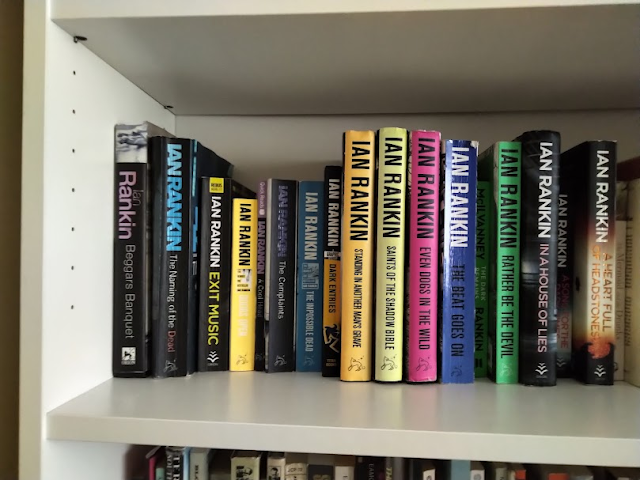
At the start of April, I published a blog (https://payaso-de-mierda.blogspot.com/2024/04/fife-flyers.html) dedicated to the non-Inspector Rebus works of Ian Rankin, promising that I’d return with another one about the character Rankin is best known for, once I’d done the hard yards by reading the rest of the books. Well, here it is: my consideration of 24 novels, a volume of short stories, 2 stage plays and a quasi-travel guide all about Fife’s greatest cop, curmudgeon, music obsessive and pub habitue, all in one place…

As I mentioned last time, my 2024 reading resolution was to complete the entire published works of Ian Rankin. Considering that until I began my Christmas Holiday in December 2023, the only Rebus novels I’d read were Saints of the Shadow Bible and Naming of the Dead, this was a decent task I set myself. Luckily, I took heed of one of the most important bits of advice I was given about reading the entire Rankin oeuvre; namely, it didn’t essentially matter which order I read the books in, which is just as well as I’d started my journey with volume 19, then moved on to volume 16. Consequently, I then ploughed my way through the collected short story collection, The Beat Goes On, which included the novella Death is not the End that was revisited in an expanded form in Dead Souls. Confused? Keep reading, I hope it will all become clear.


Here’s something that won’t endear me to Ian Rankin. Even though I’ve read almost his entire published works, I’ve never bought one of them new. At first, I came across the first few books on the shelves at New York & Murton WMC. Rather like the austere Goths of Rebus and Rankin’s home territory of Fife, New York club isn’t a luxurious or glamorous watering hole. It’s a scruffy, neglected ale house with a huge bookcase full of dog-eared paperbacks that you’re invited to take from and replenish when you can. Amazingly, I found these Rebus books going free and so I replaced them with titles I owned that I hadn’t enjoyed (no names; no pack drill).

When this well had run dry, my affection for Rebus had turned, little by little, into an addiction. I found myself utterly wrapped up by the novels and the world they inhabit; not just in terms of working out the various aspects of a whodunnit, but well and truly invested in the lives of Rebus himself, and also other characters, such as Siobhan Clarke (a hero as she’s a Hibee), the maligned but not malignant Malcolm Fox, Big Ger Cafferty (a really violent heterosexual man) and a whole load of others. Of course, the 2024 BBC Scotland series Rebus also impacted upon my consciousness. Goodness, I enjoyed it, even if Siobhan, Malcolm and, especially, Michael Rebus were utterly different to how I (and presumably Ian Rankin) had imagined them.

To feed my addiction, I scoured the second-hand shops of North Shields and Whitley Bay for the books I was missing, picking up a few titles here and there, but then when I really needed to join the dots and complete the collection, it involved some sustained digging on Ebay, where I managed to get all the ones I was missing for around £2.50 a pop, including P&P. Hence, once the deliveries arrived, all I had to do was read the buggers and now that task is complete, I’m going to write about those same buggers. Despite the fact I didn’t read them in chronological order, I’m going to discuss them that way, so get yourself a long spoon and get ready to sup up knowledge and opinions about the fly Fifers…

1 Knots and Crosses (1987): It’s hard to imagine Rebus being a one-off character, but that’s how Rankin, still fresh from his debut literary novel, the superbly grim The Flood, had envisaged things playing out. In fact, our hero was supposed to die at the hands of a former SAS colleague Gordon Reeve, who appears in a more benign form in the Jack Harvey novel Blood Hunt. Perhaps most significantly we also meet Samantha Rebus, who refers to the trauma she endured in this novel in A Song for the Dark Times, set some 35 years later, showing just how interconnected characters and events are in the Rebus universe.

2 Hide and Seek (1990): This book, involving the ritualistic murder of a junkie and some sexually motivated malfeasance by the upper echelons of society was Rankin’s first attempt to update Dr Jekyll and Mr Hyde to a modern day Edinburgh setting. It was also, apparently, the time when he actually began to like Rebus and so settled on the idea of making him the central character in his subsequent novels. A damn fine idea if you ask me.

3 Tooth and Nail (first published as Wolfman) (1992): Even though many of his early novels, especially the Jack Harvey trio, involve locations far removed from Edinburgh, this is the only Rebus book to move south of the border. We take it as read that visiting Fife (home soil), Glasgow (heaven forfend!) and the Highlands (where Sammy settles down to raise her daughter) are part and parcel of any Rebus adventure, but car chases through the West End, and I don’t mean Gorgie (yuk!), are rare in Rankin’s works. One explanation is that when he wrote this, Rankin was living in London at the time and hating it, so he brought a bit of home down to visit. It’s a bloody great, if anomalous, read and also the first book to include that familiar eminence grise Morris Gerald Cafferty.     

4 Strip Jack (1992): Published later the same year, Strip Jack is an extended riff on a familiar Rankin theme. Namely, the probity, or lack thereof, of Scottish politicians, especially those who bellow loudest for independence. In this case, the MP is (relatively) innocent, while the back story is another familiar one. Rebus and his problems with women. When we met him in Knots and Crosses he was already long divorced from Rhona (mother to Sammy) and involved with DI Gill Templer, who was more than a tad career oriented (she ends up as Rebus’s boss for a while). Hence the arrival on the scene of Dr Patience Atkin; a stolid GP of inflexible beliefs whose character belies her first name. There’s no happy ever after on the horizon with this one.

5 The Black Book (1993): As is proved at the very start of The Black Book. Rebus has moved in with Dr Patience, partly because brother Michael, fresh out of nick, lands on his doorstep, with only the boxroom in Rebus's flat available as he’s rented the place out to a gang of nameless students. Out on the swally, Rebus meets an old army friend, Deek Torrance and misses dinner with Patience. She locks him out, forcing him to sleep at his place, on the sofa. At work, Rebus's colleague Brian Holmes is put into a coma after being attacked in the car park of the Elvis-themed Heartbreak Cafe. Rebus interviews Eddie Ringan, who owns the restaurant, and Pat Calder, Eddie's partner, but they prove to be of little help. Brian's girlfriend, Nell Stapleton, tells Rebus that Brian had a 'Black Book', in which he kept interesting snippets of information. She suggests that Brian was attacked because of something in it. She also feels guilty, since she had argued with Brian just before he went to the restaurant. As a result of Brian’s hospitalisation, Rebus gets to work with new recruit Detective Constable Siobhan Clarke.

Through some convoluted plot twists and errors of judgement (including buying a gun that is revealed to have been used in a murder years before), Rebus is suspended from duty for the first time in the series. This, rather like exasperated characters nipping the bridge of their nose near the tear ducts with finger and thumb, is one of the most repeated motifs in all of Rankin’s novels. Things partially clear up in the end. Rankin fools Big Ger into beating up a pathetic sex criminal, meaning he can be fully investigated while inside. Finally, Rebus accuses Nell of being the one who knocked Brian Holmes out. Although he doesn't have any evidence, he does note that she had a motive after the arguments she'd been having with Brian. A long and very satisfying read.

6 Mortal Causes (1994): Set during the Edinburgh Festival, the novel starts with a brutally executed corpse being discovered in Mary King's Close, an ancient subterranean street in the Old Town. The body has a tattoo identified with Sword and Shield, a fictional, long-defunct Scottish Nationalist group with links to sectarianism in Northern Ireland, specifically climbing into bed with the kind of deluded Orange loonies who spout on about an independent Six Counties. The victim is Big Ger's largely estranged and ultimately worthless son, and the plot moves towards the prospect of a terrorist atrocity in a tourist-filled Edinburgh. It always bothered me why Cafferty would be pals with the Red Hand lot. Seemingly, the scriptwriter for Rebus felt the same, as the sections based on this book show a couple of No Surrender types coming off worst against Big Ger, stating they should never have mixed with someone called Cafferty and Morris Gerald himself saying he feared a united Ireland as all the Prod headcases would return to Scotland and ruin his business interests.

7 Let It Bleed (1995): Named after a Rolling Stones album, though I’m not sure why, the book starts with a car chase, almost as exciting as the one in Tooth and Nail, across Edinburgh, in order to apprehend kidnappers. Sadly, it culminates with the two youths the cops are chasing throwing themselves off the Forth Road Bridge and in Rebus being injured in a car crash. Rebus's upset over this allows Rankin to show the character in a new light, revealing his isolation and potentially suicidal despair as, without work to fill in the gaps in his working hours, Rebus is basically bereft.

After the unconnected suicide of a terminally ill con, Rebus pursues an investigation that implicates respected people at the highest levels of government, and due to the politically sensitive nature of what he is doing, he faces losing his job (another suspension!), or worse, ending up inside. He is supported by his daughter Sammy, allowing their distant relationship to be built upon and him to finally extricate himself from the precarious situation.

8 Black and Blue (1997): Again, named after a Rolling Stones album, the book focuses on Rebus’s new working environment at Craigmillar Police Station, as Rankin had decided to avoid any fictional locations, to ground the Rebus series in reality, even if the events were (thankfully) imaginary. Rebus is investigating the Johnny Bible case, a spree of recent killings bearing a striking similarity to the factual Bible John case of the late 1960s. Rebus is fascinated by the killings, and studies them off-duty through old newspapers and reports.

The book switches to Bible John's viewpoint, which is a technique Rankin had explored before, but not previously in the Rebus series which, until this point, had been entirely from the cop’s point of view. If anything, this narrative device takes the novels to a higher level of plausibility as we are no longer in the grasp of an unreliable (after a few hours in The Oxford Bar) narrator. The 1960s serial killer, or a fictional representation of him, called Ryan Slocum, arrives in Scotland, apparently to pursue Johnny Bible, whom he calls the Upstart. Investigating libraries, Bible John starts tracing anyone who has researched him.

In Partick, much against his will, with CI Ancram and an old friend, DI Jack Morton, Rebus continues investigating Johnny Bible, and calls on his relationship with Cafferty, now behind bars. Because of his respect for Rebus despite his being a police officer, Cafferty arranges a meeting for him with Uncle Joe, a Glasgow gang leader.  Rebus heads back home to brief Gill Templer, then visits one of his colleague's snitches, only to find him dead in the canal.

Bible John, meanwhile, has discovered that both the Upstart and Rebus have been researching him and wrestles with the idea of tipping off the police about his own findings, but decides to deal with the Upstart himself. Rebus notes his Bible John clippings have been sifted through.  The reader learns that Bible John broke into Rebus's flat, looking for his business card, which he gave Rebus before learning of his work with the police. Talking to Siobhan, Rebus discovers that Johnny Bible had been using a pseudonym to research his predecessor; while Bible John closes in on the Upstart, getting closer and closer to his identity. Posing as a police officer, Bible John narrows his own list of suspects down to two.

Rebus, with Siobhan's help, determines that Johnny Bible is Martin Davidson. The police raid his house, only to find that he has been killed by Bible John. Items in the house which he took from his victims confirm that Johnny Bible was Davidson. During the party at CID afterwards, Rebus realises that Ryan Slocum and Bible John are the same person. He goes to Slocum's home, to find that he has disappeared. His wife tells Rebus that his trunk has disappeared from the loft. The reader is told the trunk was full of the ‘souvenirs’ he took from his victims. The book ends with Holmes leaving the force, and Rebus throwing out his Bible John clippings. A downbeat ending to a dramatic and gripping thriller that marks a defined gear change in Rankin’s writing style.


9 The Hanging Garden (1998): Named after a song by The Cure, The Hanging Garden now finds Rebus stationed at St Leonard’s. He is involved in four cases which turn out to be intertwined. He is removed from the investigation of the murder of Mr Taystee, an ice-cream vendor, and assigned instead to investigate Lintz, a possible Nazi war criminal living quietly in Edinburgh. His conversations with Lintz about guilt and responsibility cause Rebus to recall being stationed in Belfast at the beginning of the Troubles. Rebus also volunteers to be the liaison with Crime Squad's surveillance of up-and-coming gangster Tommy Telford. Finally, he stumbles into the role of protector of a traumatised Bosnian prostitute, who has associations both with Telford and with a Chechen gangster named Tarawicz (Mr Pink Eyes) operating out of Newcastle; she leads the police to the discovery that Japanese businessmen (one of whom turns out to be a Yakuza member) are associated with Telford. Big Ger, still in Barlinnie, is thought to be engineering attacks on Telford, to maintain control of crime in Edinburgh, and Rebus and his colleagues must track the growing gang war. Rebus's insights lead the Crime Squad to mount an operation against Telford using Rebus's old friend Jack Morton, who is killed as the operation goes wrong. Sammy is knocked down in what looks like a deliberate hit-and-run. Through most of the novel, she is unconscious, with her mother Rhona and, often, Patience (no longer involved with Rebus) at her bedside. Rebus visits her hospital room but again and again he leaves to investigate or confront the various gang leaders and members. Although he resists Telford's assumption that he is part of Big Ger's team, he asks Cafferty to find the driver of the hit-and-run, certain that someone was trying to send him a message. In the end, this is not the case.

Critically, this is one of the most praised Rebus novels. As John Lanchester said in the London Review of Books, "The turning-point in Rankin's career came in 1997 with the publication of Black & Blue, which showed more ambition and range than earlier books in the series, interweaving an unsolved historical serial killer case with a view of the Scottish oil industry. The Hanging Garden is comparable in scope, since the "sheer range of subjects ... is one of the keys to the novel's success.” According to Allan Massie in The Scotsman, The Hanging Garden “not only "confirmed Rankin's reputation but "suggested that the categorisation of fiction into straight and crime novels is obsolete." Gill Plain points out that The Hanging Garden “intensifies Rebus's personal anguish and guilt over his failures as a soldier and a husband/lover/father, focused now on Sammy's terrible accident, while denying the character the consolations of closure, since solving the whodunnits does not really distribute guilt to the perpetrators in this novel.” Plain also points out that the Professor Lintz character, a respected citizen who probably supervised a Nazi massacre, is another example of the Jekyll and Hyde theme which Rankin had pursued through his first few Rebus novels.

10 Dead Souls (1999): The title refers both to the Joy Division song and to the 1842 Nikolai Gogol novel of the same name; quotes from the latter appear at the beginnings of the two divisions of the book. While investigating a poisoner at Edinburgh Zoo, Rebus sees Darren Rough, a known paedophile, seemingly photographing children and decides to out him, in spite of assurances that he wants to reform. Later Rebus tries to help Darren, thinking better of his action, but is unable to stop him being murdered.

Meanwhile, Rebus has been assigned to keep a watch on Cary Oakes, a convicted killer back from the US who, having served his time in prison, has come to Edinburgh to settle accounts from his past. His experience with both Rough and Oakes makes Rebus think out his prejudices and question how much a person is the product of his inherited nature, and how much nurture shapes that character. He has to confront this once again when he discovers that the reason behind the suicide of his police colleague Jim Margolies was fear that he was becoming like his incestuous father. Rebus also has to face up to his own past and the route he took to escape it when his friend Brian Mee and former girlfriend Janice approach him to help find their son Damon, who has gone missing, in the section of the book that had previously been the novella Death is not the End.

His search for answers to all his questions involves him in discovering how implicated a respected doctor had been in protecting two paedophiles then on trial for conspiring to abuse children in care homes. Darren Rough had, in fact, been brought to Edinburgh to testify against them. And while investigating Damon Mee's last appearance at a party held by Ama and Nichol Petrie, the children of a high-profile judge, he finds out that the son is a cross-dresser and had brought Damon to the party while in his female role.

Another antagonist from Rebus’ past, the journalist Jim Stevens, is attempting to make a come-back by arranging an exclusive interview with Cary Oakes. The story he gets is sheer rubbish, since Oakes is an arch-manipulator who is using Stevens as a smokescreen. Realising this, Stevens joins forces with Rebus in trying to find Oakes. When he succeeds, Oakes stabs him to death and then goes after Rebus, but underestimates him, and is kicked into the path of a speeding car. Those left alive must continue to cope with their problems. Knowing some answers does not really resolve the divisions and imperfections in society which it is the job of Rebus and his colleagues to police. It’s a very sombre book and less breakneck than the previous two novels, but an enjoyable and somewhat philosophical read.

11 Set in Darkness (2000): This is another absolute stormer. Set in December 1998, with references to the failed 1979 referendum, Rebus is on a committee for security liaison for the new Scottish Parliament, along with detectives from various Edinburgh stations. While on a tour of Queensberry House, which is to be incorporated into the new Parliament, the committee members open up an ancient fireplace and find a mummified murder victim. Investigating this case involves delving into the renovations of the building around 1979, when the victim was killed.

A Labour MSP candidate Roddy Grieve, from a wealthy and artistic Edinburgh family, including a painter mother, a brother who is a Tory MP, a sister who was a famous model when Rebus was young, and a brother who disappeared in 1979, is found murdered on the Queensberry House grounds. Grieve's murder is an important case, and it is assigned to DI Derek Linford; however, Rebus prefers his own methods. Meanwhile, Siobhan witnesses a suicide and becomes the investigating officer on that case. The suicide was a homeless man who had no history before 1980 but a great deal of money in the bank. As she and Rebus exchange information on their investigations, they find intersections that help them solve, or at least bring to a head, both the long-ago murder and the Grieve case. Big Ger has been released because he is supposedly dying of cancer. Rebus tries to learn more about the intertwining of the local mobs and real estate in the late 70s from Cafferty, but also uncovers the cancer scam and resolves to put him behind bars again.

Rankin noted in an interview that he had originally planned this novel as the first part of a trilogy following Roddy Grieve through his career in the new Scottish Parliament; however, he almost immediately decided to kill Roddy off. The rich and leisurely description of the Grieve family in chapter 3 may reflect the earlier plan to make Roddy a multi-book character. In the same interview, Rankin accepted that Rebus was approaching retirement; “I reckon I've got another five or six Rebus books, max.”  Rebus retires in Exit Music; the sixth Rebus book on from Set in Darkness. However, two changes in Set in Darkness seem to prepare the reader for this eventuality. Firstly, the reemergence of Big Ger from Bar-L, where he has been since 1993. While Cafferty is not Rebus's main antagonist in every novel from now on, he remains important until his death in A Heart Full of Headstones.

Another change is the expansion of the role of Siobhan Clarke in Set in Darkness and subsequent Rebus books. Developing another police detective character allows Rankin to continue to write about Rebus's world indefinitely, though from a different perspective. From this point onwards, she is the sole or primary point-of-view character in many chapters, investigating a rape and a suicide which eventually, somewhat coincidentally, intersect with Rebus's more valued murder cases. This pattern will continue in other books, as she either works a different case from Rebus or a completely different aspect of a case. Laura Severin phrased it thus: “Rebus has an investment in a patriarchy structured around evil and good, while Clarke is already an inhabitant of a post patriarchal world more alert to social, cultural and political complexities.” Although Clarke's “post patriarchal” world does not ever fully replace Rebus's struggle with Cafferty, Set in Darkness is the first novel in which it is sketched.

12 The Falls (2001): A student vanishes, and her wealthy family of bankers relentlessly pressurise the cops who are trying to find her.  Newly appointed Chief Super Gill Templer, the first female to rise so high, is trying to please her superiors and manipulate her CID officers, meaning Siobhan must decide whether to take a plum promotion or stick with the investigation alongside Rebus. The choice is an obvious one.

Two sets of clues, one nineteenth century and one twenty-first century, appear. A carved wooden doll in a coffin found near the missing woman's East Lothian home leads Rebus to the National Museum of Scotland's collection of dolls in coffins found on Arthur's Seat in 1836, after the Burke and Hare murders. Rebus also wanders into the Surgeons' Hall, where he meets several forensic pathologists of his acquaintance and sees the Burke and Hare exhibition. A museum curator, Jean Burchill, the next woman in line to try and rescue Rebus from himself, alerts him to what might be a more recent serial killer marking his exploits with such coffins. While Rebus pursues these historical angles in libraries, police archives, and museums, Siobhan interacts with an electronic trail via computer and mobile phone, showing again the clear historical and cultural differences between the two generations of police.

13 Resurrection Men (2001): Building on the ever more important theme of dinosaur policing, Rebus is required to undergo retraining at Tulliallan, the Scottish Police College, as part of a small group of senior officers whose methods need updating. They are known as the Resurrection Men, whose careers need to be resuscitated long enough for them to earn their pensions. Rebus was sent to Tulliallan for throwing a cup of tea at DCS Gill Templer, but in fact this was a staged act and he is actually working undercover on behalf of the Chief Constable to learn about a possible 1994 theft by a group of the senior officers attending the course. To complicate things further, the officers in the course are assigned the unsolved 1995 case of the murder of a Glasgow gangster, a case originally investigated by one of them and about which Rebus knows all too much. While investigating his fellow officers for a past crime, he now has to fear that they will expose his own secrets.

Back at St Leonard's, Siobhan and the other officers are investigating the brutal murder of an Edinburgh art dealer named Marber. Clues involve a stolen painting by Jack Vettriano, a large disbursement to a painter who had been claiming Marber was cheating artists and clients, and a young prostitute for whom Marber was providing a home. Siobhan suspects Big Ger of owning the spa where the prostitute works, the cab company that Marber used on the night of his death, and possibly a mysterious stash of paintings purchased from Marber a few years earlier. When the stolen painting turns up in one suspect's garden shed, he is arrested, but she remains sceptical and continues to pursue other avenues of inquiry. While Clarke turns out to be on the wrong track, and Rebus makes a mess of his undercover mission, they work as partners to discover Marber's murderer and his connection with the 1994 theft by the police officers.

14 A Question of Blood (2003): For reasons that are not made clear until the final pages of the novel, Rebus has been freshly treated for severely burned hands and is in bother. A petty criminal who had been stalking Siobhan died in a fire on the night Rebus was injured. Rebus is known to have been at the stalker's house that night but maintains that he left him unharmed and scalded his hands later at home.

An ex-soldier appears to have killed two teenagers at a private school, injured one, and shot himself. The facts seem straightforward, and the only mysteries are the motive and the origin of the gun. Rebus antagonises the survivor's father, an aggressive local MP (a familiar Rankin folk devil) who dislikes the police and is trying to make political capital out of the shooting. He also meets his long-lost cousin, whose son was one of the killer's victims and whose daughter is now being sucked into the MP's campaign. He and Clarke try to trace the gun and continue on the case when Rebus is officially suspended on suspicion of murdering Siobhan's stalker. Two secretive security service personnel appear and begin asking awkward questions, and Rebus traces their interest to the gunman's involvement in a classified military helicopter crash on Jura years before. Drugs are found on his boat, and they discover that he had secrets and some unusual friendships, including with local teenagers and an ex-RAF pilot. However, the motive for the shooting remains unclear, and Rebus begins to wonder whether they have the true version of events after all.

Forensic evidence confirms his suspicions; the MP's son turns out to be lying. He killed his fellow-students himself, driven by motives including an angry relationship with his MP father, who faces personal and political ruin because of his son's actions. With the shooting resolved, the complex web linking many of those they have been investigating becomes clear to Rebus and Clarke: there has been drug-smuggling and money-laundering, the illegal reactivation of weapons, and the theft of diamonds intended to fund a covert government deal with Irish paramilitaries. The gangster who supplies guns was involved and is found to be the real killer of Clarke's stalker, clearing Rebus of suspicion. Clarke confronts the key drug smuggler, who attacks her, escapes, and then crashes his light aircraft. A distraught Rebus witnesses the crash and assumes for a time that Clarke was on board and is dead. Thankfully, she isn’t. The case over, Rebus gets drunk. He revisits the scalding of his hands, and the reader learns that the accident happened at home during a blackout after his previous drinking bout, explaining why he has avoided alcohol during the events of the novel. Recent events make him reassess his life and relationships, and he plans to try to repair some of his broken family ties.

15 Fleshmarket Close (published in the US as Fleshmarket Alley) (2004): Despite the fabulous title and glorious jacket design, this is the nearest I felt to the sensation Rankin might just be phoning things in. As the book begins, Rebus has no desk to work from, presumably as a hint from his superiors that he should consider retirement, but he and Siobhan are still hard at it, investigating some seemingly unconnected cases. The book uses two new settings: a bleak, sink estate divided between the indigenous population and refugees (based on Wester Hailes), and a grim, socially deprived small town whose economy is dominated by an internment camp for asylum seekers (based on Dungavel). The sister of a dead rape victim is missing; skeletons turn up embedded in a concrete floor; a Kurdish journalist is brutally murdered; and the son of a Glasgow gangster has moved into the Edinburgh vice scene. Predictably, all the strands intertwine, Rebus solves them (with Siobhan’s help) and walks away at the end, feeling no redemption from his actions. Just another, ordinary dispiriting day at the office.

16 The Naming of the Dead (2006): Now this one is right bang on form; one of the very best in the series. Set in July 2005, during the week of the G8 summit in Gleneagles, an underlying thread throughout the book is that of familial relationships; the book opens with Rebus attending his brother Michael’s funeral. As he was a couple of years younger than John (born in 1947 or thereabouts), it’s a sad and premature death, which effectively ends all Rebus’s ties to his native Fife. Meanwhile, Siobhan’s shaggy-haired Maoist parents arrive in Edinburgh as part of the protests, demonstrations, and scuffles that surrounded the G8 summit. Clarke had defied her parents’ ideology by becoming a police officer, but she now wants to feel like a daughter.

Rebus is nearing retirement and is sidelined until the apparent suicide of MP Ben Webster at a high-level meeting in Edinburgh Castle. It emerges that Webster was campaigning against the arms trade, and Richard Pennen of Pennen Industries, a dealer in weapons technology, comes under suspicion.  At the same time, a serial killer seems to be killing former offenders, helped by a website set up by the family of a victim. Clues have been deliberately left at Clootie Well, moved from the Black Isle to Auchterarder for the purposes of the plot, a place where items of clothing are traditionally left for luck.

Siobhan is placed in charge of the investigation, although she is outranked by Rebus, and finds herself having to compromise with Big Ger, for whom one of the victims was working as a bouncer, in hunting down the riot policeman who apparently assaulted her mother at a demonstration. The new Chief Constable, James Corbyn, is keen to put any potential controversy from the investigation of these sordid crimes on hold until the focus of the world's media has moved on. He puts Rebus and Clarke under suspension when they disobey him, and they need to rely on Ellen Wylie for help.

David Steelforth, the London-based Special Branch (SO12) Commander who is overseeing the policing of the G8 summit, seems to be holding back Rebus' work at every turn. Rebus and Clarke blow the cover of one of his agents. Former preacher Councillor Gareth Tench seems to Rebus to be involved due to his apparent closeness to one of the suspects, Niddrie Ned, Keith Carberry.

Rebus and Clarke pursue their investigation daily, and sometimes hourly, against the background of the G8 summit, seen from both the police side and that of the protestors; among the events referred to are the epic and peaceful Make Poverty History march, the 7/7 London bombings, the 2012 Olympic bid and George W. Bush falling off his bicycle whilst waving at police officers, which means the whole book is not only grounded in reality, but has a total sense of a particular time and place that makes it seem, from almost 20 years distant, to be as much a historical record as a police procedural.

The title refers to: the ceremony Clarke's ageing left-wing parents attend, where the names of a sampling of the dead from the Iraq War are read out; the list of victims created by Rebus and Clarke as they try to unravel the crime; and also to John Rebus' evocation of grief in naming the many of his own friends and family who have died in the course of his life. By the end of the book, Clarke realises that she has grown closer than ever to understanding Rebus and increasingly fears that she is becoming like him, which wasn’t how she wanted to feel at the start of the novel.

17 Exit Music (2007): Named after the Radiohead song Exit Music (For a Film), the novel takes place between November 15-27, 2006. Rebus, whose last day in the Edinburgh CID is November 25, and Siobhan are investigating the death of a famous Russian exile poet who was mugged and beaten to death on King's Stables Road. Then a sound recordist with close ties to the dead Russian poet dies at home in an arson fire. Rebus discovers that the dead poet had eaten his last meal with the recordist, then had a drink with Big Ger Rebus finds Cafferty's hand in many schemes (drugs, abusive landlord practices), but the biggest ones involve real estate and are quite legitimate, even if Morris Gerald is at his most loathsome in this book.

Meanwhile, Siobhan, on the cusp of promotion to DI and given charge of the case, tries to find her own way, both dreading and looking forward to losing her mentor. She takes on a protégé of her own, a street cop from a family involved with petty crime, Todd Goodyear. Rebus is suspended, once more for old times’ sake, for insulting a powerful Scottish banker in the presence of the Chief Constable. He continues to pursue his hunches, often with Clarke's collusion. At one point he meets Cafferty alone; Cafferty is attacked immediately afterwards, and Rebus is carefully framed for it. On his last day on the job, however, Rebus succeeds in disentangling his suspicions and identifies the killers of the poet and the sound recordist.

Exit Music includes Rebus's retirement at the age of 60. Rankin had been looking forward to this event at least since 2000, when he commented in an interview that Rebus “lives in real time; he was 38 in Knots & Crosses and he's 52 now. He'll have to retire at 55.” Rebus in fact postponed retirement until age 60, clinging to his job, although in the two previous books, he thought frequently about his upcoming retirement. After this book, Rankin did not publish another Rebus novel for five years, though he continued to write about Edinburgh’s police, but with a new protagonist, Malcolm Fox, in The Complaints (2009) and The Impossible Dead (2011), before bringing Rebus back as a co-protagonist. In all his appearances, both solo and as part of the Rebus series, Fox is pragmatic rather than heroic, and as an investigator even more outside the brotherhood of police detectives than Siobhan.


18 Standing in Another Man's Grave (2012): I’ve recently learned that the title is a mondegreen, apparently. Rankin misheard Jackie Leven singing Standing in Another Man's Rain, a mistake he gives to Rebus. Excerpts from Leven's songs appear throughout the book. As all I know of the late Jackie is Doll by Doll’s The Palace of Love, which I still have on 7” single, I really should investigate his works. See also Frankie Miller, John Martyn, Bert Jansch, Matt McGinn et al.

Anyway, having been retired for five years, Rebus continues to investigate as part of the cold cases unit, as a combination of New Tricks and Waking the Dead I suppose. The mother of a missing girl enlists his help in finding out what happened to her daughter, leading Rebus to uncover the truth about a series of seemingly unconnected disappearances. Despite now being a civilian, he is seconded to CID, where the most recent case is being handled by Siobhan and her unit. The serial killer has found his victims on the A9 highway and Rebus travels to Pitlochry and Inverness several times, driving as far north as his daughter Samantha's home.

In Edinburgh, Rebus continues to associate with Big Ger and meets two younger gangsters who are related to the missing girl. His activities are known to Malcolm, who believes that he can take Rebus down for corruption. However, the constant reorganization of the Scottish police structures mean that Rebus loses his official position by the end of the novel in any case.

19 Saints of the Shadow Bible (2013): Like Standing in Another Man’s Grave, the title is taken from a Jackie Leven song. The novel takes place in February and March 2013 against the background of the dissolution of regional police forces as they are merged into the monolithic Police Scotland. Malcolm Fox’s role is disappearing, and he undertakes an investigation on behalf of the Solicitor General in the hopes of finding a place in the new organization. Siobhan C is stationed at Gayfield Square but follows important cases to Torphichen and Wester Hailes police stations. Incredibly, Rebus has bounced back from losing his civilian role with the Cold Cases Unit and has rejoined succeeded CID, albeit as a Detective Sergeant instead of a Detective Inspector. He works with both Clarke and Fox but is primarily investigating issues relating to a long-defunct police station, Summerhall, where he was assigned in 1982 as a newly minted detective.

Also relevant to the cases is the upcoming 2014 Scottish independence referendum; a Justice Minister, whose death Clarke is investigating, is a figurehead for the Yes campaign, while Rebus’s Summerhall colleague Gilmour, Fox’s target, is a prominent No supporter. This recalls Set in Darkness, which took place in the midst of the first elections to the new Scottish Parliament. Clarke and Rebus’s apparently trivial investigation of a university student’s car crash becomes complicated when the student’s boyfriend’s father, the Justice Minister, is found dead in his own home. Meanwhile, Rebus is invited by Fox to help with the opening of a very cold case involving the Summerhall policemen, who called themselves Saints of the Shadow Bible. This recalls the short story Dead and Buried, published in The Beat Goes On and set during Rebus’s stint at Summerhall. DI Stefan Gilmour tests Rebus by allowing him to investigate a watch buried with a man named Joseph Blay, who was hanged for murder in 1963. Rebus finds that Gilmour's dead hero, DI Charlie Cruikshank, had suppressed evidence that could have exonerated Blay. But Rebus tells Gilmour that he will not take the matter to "The Complaints" as "what good would that do?". Gilmour says "Welcome to the Saints of the Shadow Bible, John" and after a moment's hesitation Rebus returns his handshake.

The surviving Saints want Rebus to ensure that Fox does not disrupt their lives, while Fox hopes Rebus will implicate himself and Rebus wants to find out more about the secrets, he only glimpsed thirty years earlier. Rebus ends up using his confrontational techniques (intimidation and threats, recruiting snitches, bargaining with gangsters) to assist both Clarke and Fox. The three detectives come to respect each other, which sets the agenda for the rest of the Rebus series.

20 Even Dogs in the Wild (2015): The title for this one comes from a song of the same name by The Associates from their album The Affectionate Punch. A former Scottish senior prosecutor has been found dead, with a threatening note in his pocket. Siobhan is in charge of the high-profile case. Then Big Ger receives a similar note, and someone shoots at him. Rebus, pushing 70, has retired for the second time, but is asked to join in the investigation. Meanwhile Malcolm is drafted into a surveillance team monitoring a group of Glaswegian gangsters who look set to move on Edinburgh. Cafferty, the young Edinburgh gangster Darryl Christie, and the Glasgow gang are all looking over their shoulders at each other and at the police. Cafferty is the one who recognises the history behind the vendetta against him and a few other survivors of a disastrous event thirty years earlier. Perhaps aware of the need to keep onside with everyone else, Ger has taken to referring to Rebus as John rather than Straw Man. Equally strangely, Rebus has become the owner of a stray dog, Brillo, that latched onto him outside Big Ger’s house.

21 Rather Be the Devil (2016): As well as a dog, Rebus has also come into possession of a new lady friend; Dr Debra Quant, a forensic pathologist. The novel opens and closes with them dining in a restaurant which is part of the Waldorf Caledonian Hotel. The explanation for the modest and abstemious meal is Rebus's diagnosis of COPD and a shadow on his lung, which leads to him quitting cigarettes and moderating his alcohol intake. However, his mind is still razor sharp and Rebus is reminded of an unsolved murder at this hotel, dating back to 1978; an unsolved case in which Edinburgh bankers and pop stars were suspects. Rebus revisits the case, which becomes intertwined with others more actively pursued by the police in the coming week.

Malcolm has been promoted to a desk job at Gartcosh where Police Scotland have the Scottish Crime Campus. Meanwhile, Siobhan is investigating the mugging of Darryl Christie, a young gangster who, in Standing in Another Man's Grave, stepped into the void created by Big Ger's semi-retirement. Because HMRC are interested in a shell companies scheme involving Christie and banking scion Anthony Brough, Fox is sent back to Edinburgh to join Clarke's investigation. Then a retired policeman dies, drowned with his hands bound, shortly after talking to Rebus about the unsolved case. This brings a Gartcosh Murder Inquiry Team to Edinburgh, and Fox is asked to join them. Rebus manages to follow both enquiries, and Fox sees to it that Siobhan comes to the attention of the Gartcosh group, and so the three are again working together. Sadly, the title comes from a John Martyn song and not part of the lyrics of Creeping to the Cross by That Petrol Emotion.

22 In a House of Lies (2018): This one isn’t from Einstürzende Neubauten either, alas. Inspired by the murder of Daniel Morgan by rogue members of the Metropolitan Police, the book begins when some boys discover a car with a long-dead body in the boot, in a woodland which has been the subject of a real-estate dispute. Rebus, now suffering badly from COPD, having given up cigarettes and almost stopped drinking, worked the 2006 missing-persons case in the months before his original retirement. This is case widely agreed to have been badly handled. Rebus himself had tried to protect from publicity the missing man's lover, son of a detective inspector in the old Strathclyde Police, and had also been hoping to tie in Big Ger. The murder inquiry now is handled by a team from Police Scotland, but Siobhan and Malcolm are included. Clarke has recently been investigated by a corrupt pair of Anti-Corruption Unit cops for leaking information to a reporter, and she is being harassed by a mysterious person over a recent case which in fact she handled well. Rebus, at her request, re-investigates that case; he tangles with the ACU team, and hopes again to see Cafferty connected to the body-in-the-boot murder. It seems that, in the absence of family, job, hobbies or love interest, all that motivates Rebus to keep going is a desire to finally nail Big Ger.

23 A Song for the Dark Times (2020): This was the final one in the series I read, having devoured A Heart Full of Headstones back in early January. This is a desperately sad novel, with 75-year-old Rebus and 45-year-old Sammy thrown back together in terrible circumstances, following the murder of Sammy’s semi-estranged partner Keith. We’ve not met Keith before and, you know, I’m sorry we didn’t get to know him, as he seemed to have some interesting character traits. In the Prologue, Rebus moves down two flights of stairs to the ground-floor flat in the same Arden Street tenement, with a lot of help from Siobhan. His first morning in the new flat, he gets a call from his daughter Samantha saying her partner is missing.

Rebus immediately makes the long drive to the (fictional) village of Naver near Tongue in the extreme north of Scotland. He finds Keith’s body. In trying to discover why he was murdered, he gets to know his granddaughter’s father for the first time; Keith had been obsessed with the history of a nearby World War II prison camp, some of whose survivors settled locally and are still alive. The local police see Samantha as the obvious suspect in Keith’s murder. While Rebus can’t help considering this possibility, he frantically researches other options. Samantha is devastated and blames it all on him.

In Edinburgh, Siobhan and Malcolm are part of the Murder Inquiry Team looking into the mysterious killing of a Saudi student. This takes them into the world of wealthy international socialites and their financial projects. The dead man’s closest friend was a young Scottish aristocrat whose family trust owns most of the area around Tongue, so Rebus’s investigations overlap with Siobhan’s. Big Ger is the fourth point-of-view character. He now runs an exclusive club where he films the guests to obtain blackmail material, and he involves Fox in one of his blackmail projects. Though Fox plays along, Cafferty’s attempt to control him and his Police Scotland boss ultimately fails. At the end of the novel, a young thug with a gun, who Ger had earlier given a good kicking, is on his way to see Cafferty.

24 A Heart Full of Headstones (2022): The title comes from the song Single Father by Jackie Leven, four lines of which are quoted on the last page of the novel, which is set during the period when COVID-19 is a threat, but lockdown has ended, so probably in 2022. The novel is bookended by a prologue and epilogue both titled simply Now. In these, Rebus is on trial for a crime he commits at the end of Then, which incorporates the main narrative (divided into 8 days), which takes place not long before whereby Rebus, Siobhan and Malcolm all pursue their own investigations, though the cases come together around a policeman named Francis Haggard, stationed at Tynecastle in Edinburgh. The three of them frequently exchange information or ask each other for help. Clarke is at first working on the criminal aspect of Haggard's domestic abuse of his wife, which has resulted in their separation; Clarke interviews the wife, Cheryl, and her sister Stephanie Pelham, who has taken Cheryl in. Haggard is threatening to reveal the police corruption at Tynecastle unless the case is dropped. Then Haggard is murdered, and Police Scotland sets up a Major Inquiry Team (MIT) which includes both Clarke and Fox who, in his time in the Complaints had wanted badly to convict a Tynecastle cop, Sergeant Alan Fleck, now retired. In Fleck's day, Rebus had helped him, giving him tips and setting up a meeting with Big Ger. Fox's concerns push Rebus to recall how he tried both to fit in and to keep his integrity when dealing with Tynecastle. On the MIT, Fox represents the official concern with the old cases that Haggard, but also Fleck, are bringing up. Fox also represents other interests of Gartcosh, the administrative campus of Police Scotland, including possible links with smuggling of cars for Fleck's dealership and of drugs.

While Malcolm keeps his conscience clean by obeying the rules, Siobhan understands that Rebus's rule-breaking is usually in the interests of justice. As a woman, she could never be part of the privileged fraternity of old-fashioned policing, herself, but she accepts that sometimes the methods can be used to good ends. She is dismayed and sceptical when Francis Haggard claims that his wife-beating was a result of PTSD, caused by his years as a policeman and his participation in the culture of corruption, bullying, violence, and misogyny at Tynecastle station. As fervent supporters of James Connolly’s team, both Siobhan and I recognise the meaning implicit in such a location.

Rebus, meanwhile, has been assigned by Big Ger, whose criminal empire has crumbled, to look for a man named Jack Oram, supposedly so that Cafferty can apologize to him. This turns out to be a careful ploy to get Rebus to stir up trouble for the Mackenzie family: Fraser and Beth, an old flame of Ger, and their daughter Gaby, who owns a nightclub. They have taken over some of Cafferty's old businesses, including apartment rentals and drugs. Haggard was killed in an apartment rented to him by the Mackenzies, so they are also coming to the attention of the MIT. Jack Oram's son Tommy is working for the Mackenzies, and Rebus becomes somewhat friendly with him. Rebus pursues the various leads he turns up, though he doubts Jack Oram is still alive and he is more interested in what Cafferty is trying to accomplish. Clarke and Fox, along with the rest of the MIT, gradually trace Haggard's last day, using phone records, CCTV footage, and file boxes full of old investigations of the Tynecastle police station. Clarke is successful in identifying the murderer, and Fox informally promises her a promotion to DCI. Rebus, however, tries to pursue his investigation with a crowbar, and it does not end well for Big Ger, or Rebus.

Rankin has said that the story was inspired by several instances of police violence or misbehaviour, such as the 2021 murder of Sarah Everard, prompting him to devise a plot in which Rebus tries to clear his name as a bad cop, but Rebus was a bad cop as he was part of the culture that produces bad cops.” This is not the first novel where Rebus has an opportunity to think with regret about situations where he made mistakes; he recalls difficult past cases in Black and Blue, Resurrection Men and Saints of the Shadow Bible. As in those novels, Rebus both fears exposure of past misdeeds and examines his own motives at the time, trying to ascertain whether, in breaking the rules, he also crossed the moral lines he had drawn for himself. In this case, though, he is looking back specifically at situations in which Cafferty manipulated, when he was seen, as he still is by many, as the gangster's puppet. This can no longer be the case and Rebus is looking at spending the rest of his life behind bars as a result.

 Additionally, there are also these publications to consider -:

Rebus’s Scotland; A Personal Journey (2005): This is certainly no tourist handbook. Rather, it is an evocative ramble, illustrated by some fine photographs, round the places that made Rebus the man he is, and Ian Rankin too for that matter. A particularly enjoyable thing about Rebus is that Rankin has not made him a glib proselytiser for the cause of Scottish Independence. He voted NO in 1979 and undoubtedly did so again in 2014, if you take cognisance of his endless grumbles about the cost of the new Parliament. And don’t get on to the subject of Edinburgh’s trams, if you know what is good for you. To love Scotland does not necessarily mean you should allow the SNP and their desire to destroy working class unity by cuddling up to the Capitalist elite, to break the bonds forged in the Trade Unions and Labour movement. Rebus would be appalled at the presence of illegally obtained motor homes in Dunfermline (oft known as Vichy Fife), the defenestration of drug dealers in Hilltown or John Swinney’s treasonous tirade against the English. Well, at least it wasn’t against Argentina like Steve Clarke’s resignation speech.

The Beat Goes On; Collected Short Stories (2014): This includes the novella Death is not the End (1998) that is the central plot strand to Dead Souls (1999). It’s brilliant, but then again so are many of the companion pieces here; brief vignettes that provide a window into the soul of our Detective Inspector, which is possibly why I fell for the whole series. These short stories, along with so many other details (his record collection, his need for a pint and whenever possible, especially on work time, the hassles with women and his eventual companion Brillo the dog) are what makes the world of John Rebus all so real. Not to mention the weather, which is always brutal, whatever the season.

Long Shadows; Stage Play (2018): I’ve not seen either of the two Rebus stage plays, but I’ve read them and what pleases me is that they are both new stories. Long Shadows actually starred Charles Lawson, aka Jim MacDonald from Coronation Street, as Rebus. No doubt this would have made the untrammelled enmity towards Morris Gerald Cafferty rather authentic.

A Game Called Malice; Stage Play (2023): At the time of writing, this is the latest Rebus product to be published. A very engaging slice of bourgeois zeitgeist, with Rebus and a few pals at a dinner party, where the hostess introduces a game of murder mystery to entertain her guests. Rebus, of course, is the one who works things out. I’m not a great theatre lover, but I’d go to this, if it ever toured.


Finally…

25. Midnight and Blue (2024): It’s not out until October and I can hardly wait. You see, I’m really missing being inside the heads of Rebus, Siobhan and Malcolm. Ian Rankin is such a superb writer that he has made these fictional characters real for me and it feels like I’ve been living in Edinburgh for the last 6 months alongside them.