Friday, 29 May 2020

2019/2020 Football Writing CV

Image

9 Newcastle Benfield programmes
1 Squires Gate programme
Stand #31; Lowest Common Denominator
View #2; Fire in my Belly
View from the Allotment End #13; Glazed Expressions
View from the Allotment End #14; Restricted View
View from the Allotment End #15; Reborn Again

Monday, 18 May 2020

Staying Alert

You really couldn't invent this current Government if you tried....

Image may contain: 2 people, people standing

So, it’s been just over a week since almost 27 million of us tuned in for Boris Johnson’s most recent state of the nation address. Unsurprisingly, rather than offering leadership for the way forward, information about the actual extent of infection or contrition for the abysmal mishandling of the pandemic by him and his coterie of clowns, this pre-recorded piffle was exactly the kind of platitudinous horseshit, delivered in a shambolic fashion, that we’ve come to associate with the blustering, devious, feckless charlatan who occasionally finds himself in charge of the country. His “roadmap” out of lockdown consisted of a whole quarter of an hour of contradictory messages couched in the kind of syntactic butchery that recalled the best work of the late, great Professor Stanley Unwin, appearing at one point to suggest it was now possible to spend time outside for the purpose of increasing mental wellbeing, but not if you were feeling down in the dumps.

Not content with sending a whole nation to bed on Sunday night in a state of baffled anger, the meaningless “stay alert” mantra was then rendered even more mendacious and obfuscatory when imbeciles like Hancock, Raab and that shithouse whose name escapes me, notably only for taking a day trip to Shrewsbury under lockdown, were thrust blinking and bullshitting in front of the cameras for the daily COVID-19 lie fest that is laughably known as the media briefing.  Frankly, after the huge swathe of retirements at the last election, it becomes ever more abundantly clear that we are at the mercy of a ruling party that is simply not fit for purpose, comprising as it does, the most inexperienced, incompetent shower of clockwork cretins ever assembled. I don’t buy the theory that Johnson is actually some kind of Machiavellian master tactician, manipulating events for the benefit of some, as yet unidentified, global masterplan; it seems ever more obvious that this blundering, indolent, sociopathic shitbag is merely a glove puppet for that evil, shady demagogue Dominic Cummings. It is gratifying to see Keir Starmer wiping the floor with BoJo every PMQ, by the simple expedient of forensic analysis of the lies spewed out by the Tories, though it does throw into even sharper relief the 5 wasted years under the stewardship of someone who would have been better served flogging dog eared back issues of Socialist Challenge from a trestle table at the Islington CLP monthly jumble sale.

Of course, the real message Johnson wanted to deliver, but failed miserably to articulate, was that the needs of capitalism required the probable deaths in service of numerous workers, specifically those who toiled in low paid, high risk jobs. Not only that but, as you could probably guess, the middle and upper classes would not be required to endure such privations. Like a gratuitously offensive rewrite of the famous sketch involving John Cleese, Ronnie Barker and Ronnie Corbett from TW3, Boris and the boys had sorted things so that the upper classes could take things easy and roam freely down country roads in their enormous motor cars, while the gently squeezed middle could send a few emails early doors from the breakfast table before meeting up with their nominated community chum for a round of golf, and the horny handed sons of toil could die, alone and in agony, but with the satisfaction of knowing their efforts had kept the wheels of industry sufficiently lubricated and rolling nicely along.

Just to put the tin hat on this desperate state of affairs,  Raab gleefully confirmed, none of us will be getting a holiday this Summer either; just as well Boris had that fortnight in the Caribbean at the start of the year then. Despite the surprising continuation of the furlough scheme that has already been denigrated by the Chancellor Rishi Sunak as, in less two months, somehow creating a whole new social stratum of lazy, feckless scroungers, who’ve had the Protestant work ethic erased from their DNA, as they are now prepared to subsist on 80% wages ad infinitum, let’s not delude ourselves about the real reason why the knives are out for all sections of the working class, especially those who are unionised. Rather like the cannon fodder who were sent over the top to their certain deaths during World War I, workers, in care, construction and (imminently) education, though not in the private sector of course, are being sent back to toil in unsafe environments to serve the needs of the profit motive.  Not only that, they’re being “advised” not to use public transport, despite the fact some of the lowest paid industries are being reanimated. Still, this will be an enormously popular move among the rank and file of the Tory Party, who will fondly remember Norman Tebbit’s facile entreaty that the unemployed should get on their bike and look for work.  The great news is that, during the week that observed the infinitely more moral World Conscientious Objectors’ Day rather than the previous Friday’s VE Day, unions stood up to the Government and, despite the nauseating lies of the Daily Mail, flexed their muscles, said no and saw some backtracking by the shamefaced vermin in the Cabinet. However, there’s a big battle still to be waged in education. Wait, watch and learn.

Of course, your average Tory probably thinks their policies regarding a mass return to work are an effective way of ironing out social inequality, by solving the problem of inadequate housing for the working class and attendant problems with social distancing, by sending the labouring multitudes back to work with, at best, a 50:50 chance of avoiding the virus. Even more crucially, reopening the schools will provide free day care, such is the value Tories put on state education, for the children of returning workers. Having spent 30 years in education, I know that teachers moan like shithouse doors in a gale at any given opportunity but, without exception, they know what is best for children rather than parents who largely treat schools as dumping grounds for their maladjusted crotch fruit. Again, in this instance teachers are correct; opening schools means potentially hundreds of thousands of pupils and staff are at risk of contracting COVID-19 and, needless to say, dying a wholly preventable and unnecessary death, simply because capitalism requires profits and human rights are irrelevant in a world where human beings are viewed by the ruling elite as expendable cannon fodder. The Tory Party does not have a conscience; any deaths will be blamed on those who finally cracked and couldn’t abide this Police State style lockdown we’ve all been forced into.

I’ve observed the fascistic strictures of the lockdown since it was introduced, though I remain convinced it has done any real good, but I’m getting pretty fucking sick of it and, while I’m not likely to put myself or other people in danger by ignoring it, I can understand why some people are at breaking point. We are social beings and being stuck in a predetermined space, without any choice of who you share that with, can lead to meltdown, never mind lockdown. For example, being restricted to 1 hour outside a day has meant my psoriasis has gone crazy because I’m denied sufficient Vitamin D from exposure to sunlight. Life is about taking calculated risks; otherwise none of us would ever emerge from our homes, but this disorganised and reactive piecemeal relaxation of the rules offers nothing tangible to build on in preparation for the full introduction of a new normal into society. Other than reopening garden centres I suppose. While most of the anti-lockdown protestors are tinfoil hat wearing geeks from the outer fringes of the New Age movement, replete with crystals, balms and incantations, as well as a scarcely comprehensible hatred of 5G technology, there is also the dangerous shadow of  ultra-right wing goons like Jayda Fransen, ready to pounce on any dissent. As about 50 people rocked up at Hyde Park for the showpiece protest, I’d suggest they have a long way to go before they’re taken seriously. The one fact that will keep Jayda Fransen’s natural constituency of barely literate, bald, middle-aged white men in chunky Italian knitwear on the straight and narrow, is their bizarre respect for authority in the shape of Johnson and his squad, if not the Filth.

With news that the R number is creeping perilously close to 1 again, we must look to the advice from Edinburgh and Cardiff; stay home, protect the NHS, save lives. Oh, and fuck the Tories as well.


Monday, 11 May 2020

Craft Work

Beer, in the time of lockdown.....


If Springfield’s notoriously corrupt and evasive mayor Diamond Joe Quimby had attended an English public school, there’s little doubt he’d be the spit of Boris Johnson. Our very own priapic, platitudinous prick addressed the nation on Sunday 10th May, by means of a pre-recorded  monologue of startling vacuity that took 20 minutes to deliver the square root of fuck all, other than the important takeaway that horny handed sons of toil should henceforth get on their bikes and cycle to all manner of unsafe workplaces, putting their lives at risk to make rich people richer. Meanwhile their bosses have been granted the permission to enjoy a daily set of 18 holes with members of their Lodge from Wednesday onwards. Please bear the following in mind, if you are called back to work; section 44 of the Employment Rights Act gives you the right to walk away from unsafe work. Too many of us don’t know our rights and may need to be reminded that you should not go to work if you feel you are jeopardising your health and the safety of others. Of course, you need to cover your back if you do that, by immediately contacting your trade union. If you’re not in a union, join one now!!

Pausing briefly to acknowledge the fact that in this region, a certain subset of ageing violent heterosexual men from the skilled working classes venerate golf and Freemasonry alongside Islamophobia as part of their Authoritarian Populist weltanschauung, the different freedoms granted by the “easing” of the lockdown by the Uxbridge and Oxbridge buffoon are allocated according to the needs of capitalism and not the general good of humanity. Big business requires more profits to maintain the social hierarchy; if this means more deaths, tough. Still, at least Sean and Matty Longstaff can play headers and volleys in the garden now…

The usual Tory approach of the stick rather than a carrot, which has recently seen those lucky enough to be furloughed branded as “lazy” and “workshy” for seeking to live on 80% of their normal wage, was reinforced by Johnson’s vague and imprecise suggestion that if we all obey our lords and masters, then the pubs might open again by late July, supposing that the decent boozers haven’t all bitten the dust during this whole hideous, dystopian gap year we’re being forced to endure.


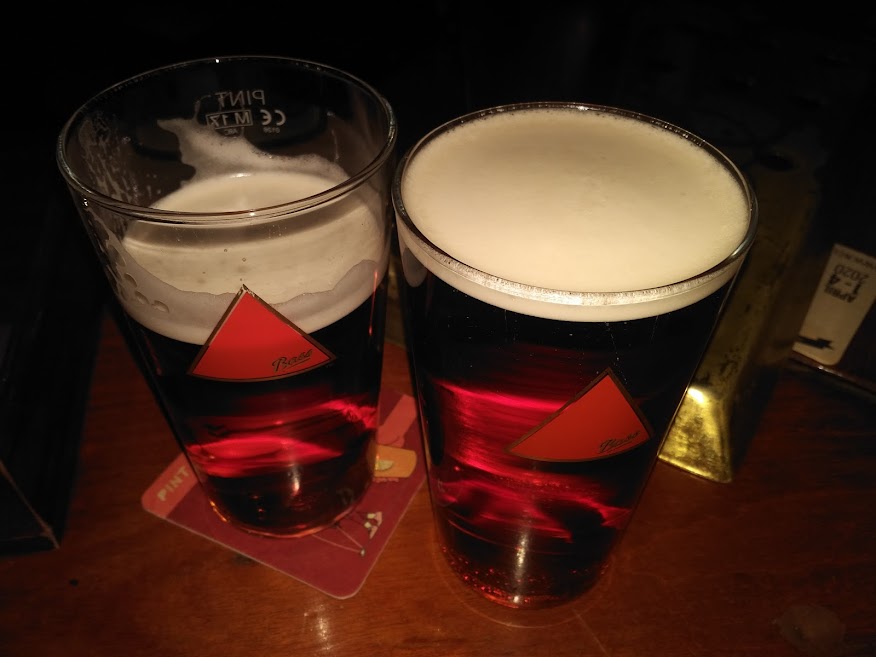
When Johnson announced the closure of all pubs on Friday 20th March, I did what every other normal person did; I went to my local. There, in the wondrous Tynemouth Lodge, surrounded by friends and acquaintances, I had my last sup of Bass to date. I’d like to say it was my last drink and that I’d embraced an abstemious lifestyle, but that would be a lie as, in common with millions of others around the country, I’ve become an avid home boozer. It’s not as if I’m one of those moralistic, ostentatious moderate social drinkers who never drink in the house, keeping only a medicinal bottle of Brandy in the sideboard for emergencies, but I normally only have a drink in the house as a final assommoir, rather than preludial draft (who on earth invented the term pre-drinking?), mainly because I like to taste the beer I buy from pubs without previous pours impeding my palate.

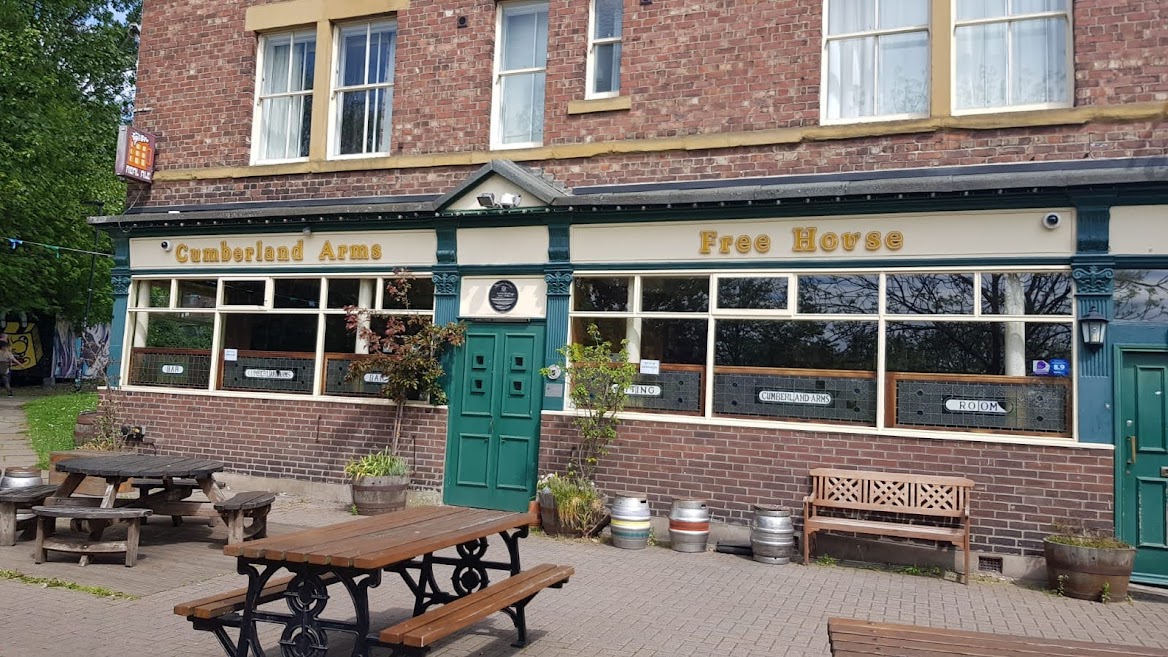
I love and miss certain pubs, almost as much as I love and miss my family and friends. The list is extensive and obvious: at the coast, The Tynemouth Lodge, The Enigma Tap, Flash House, Barca, not to mention half the buildings on the Fish Quay from The Low Lights along to The Wooden Dolly. In town, the likes of The Bodega, Bar Loco, The Town Wall, Head of Steam, Box Social, Crown Posada and Bridge Tavern are grievous blanks in my social world, not to mention the very best of the Ouseburn in the glorious jewels that are The Cumberland Arms and The Free Trade Inn, as well as The Punch Bowl in Jesmond and The Northumberland Hussar in Heaton. Every pub I’ve mentioned is a superb example of a quality beer bar that attracts an interesting and varied clientele that makes it a proper public house. I hope they all make it through to the other side of these insane times we’re living through.

Incidentally, if you are expecting this piece to be an informed series of reviews of different ales, you’ll be disappointed. Instead, I’ll direct you to my lad Ben’s Instagram account @PeevyTimes where he talks about beers I’ve never heard of with the kind of enthusiasm I reserve for bands from Glasgow. My intention is to give a less scholarly overview of what realistic alternatives there are to crates of Stella or bottles of San Miguel for the discerning tippler.

While there have always been quality real ale outlets selling glorious hand-pulled, unpasteurised, often unfiltered, pure and righteous beer, it is only really with the advent of craft ales that quality bottled and canned beer for off sales has become more readily available. I know that the enduring geniuses from Wylam Brewery have been knocking out bottled beer for a good decade and a half, but it seemed to be difficult to source it other than in ASDA or from the venerable, and reassuringly pricey, Rehills’ in Jesmond. However, from around 2014 or thereabouts, it became possible to source craft beer from many different sources. My initial favourite was Glug in the Grainger Market, run by Simone and Ian Clarkin who had already established a superb delicatessen Mmm. Going for train or house cans was the grown-up equivalent of visiting an alcohol-based Fenwick’s Toy Fair as, in those early days the choice was dizzying for the uninitiated, who chose their poison by either design or the blurb on the can at first, only learning the names of hops and styles of beer by the experience of blind testing. Tragically, having moved into larger premises on Grainger Street, they found it impossible to keep going. Similarly, the first Coastal bespoke deli and bottle shop, Boda Home, has recently closed its doors, while posh office The Wine Chambers has only one outlet open these days, allowing its North Shields branch to give way to the potentially more lucrative Tynemouth Front Street branch.

Thankfully, there are many options for those of us now forced to enjoy our libations in the garden or even indoors, which will hopefully explain why we’re lucky to be locked down in 2020 rather than in 2000 or 2010, as the choice, in terms of both merchants and products, was minimal back then. Personally, I’ve invested in both collection and delivery services and see the positives and drawbacks of both. My local beer shop is the incomparable Yard House, which can be found in the back room of the Post Office at 27-29 Percy Park, Tynemouth, North Shields NE30 4LT. Offering excellent service, a massive array of cans and bottles at decent prices, as well as up to 5 different taps that can fill any metrically measured container, they won’t sell you anything that isn’t in pristine condition and they’re happy to chat about beer all day long (even when there’s a massive queue extending half way down to Longsands!). You’ll see me in the queue almost every Friday afternoon. I’ve heard excellent things about NORD (167 Park View, Whitley Bay NE26 3RF), though as yet I haven’t used their services, but I’m hoping to remedy that soon as their range of beers looks beguiling. Check them out at: https://nordbottleshop.co.uk/

I know I said I’m not one to review beers, but I adore Tiny Dancer by Flash House Brewing Co, and not just because head honcho Jack O’Keefe plays for Tynemouth Bad Boys in the midweek cricket league. Truly, it is an exceptional beer among many exceptional brews they’ve produced. Sadly though, they appear to be in hibernation during the current crisis. Check out their website  for any news of future developments; http://www.flashhousebrewing.co.uk/ Meanwhile, another North Shields outfit is supplying both beer and bakery products. The hands down best new pub of the past 3 years, The Enigma Tap, situated at 60 Bedford St, North Shields NE29 0AL, is somewhere you must visit when the insanity ends. Until then, you can book a delivery on line, as I did, and receive bespoke door-to-door service for competitive prices, with free delivery over £30 and 10% of all sales donated to the Whitley Bay Food Bank. Check them out at: www.enigmatap.co.uk  I had Enigma Tap deliver me 8 cans of the finest beer of 2020; Citra Cryo IPA by Two By Two, who are unquestionably the best local brewery. The beer was stunning, as were the tap versions of Citra Cryo and Snakes Eyes IPA that I got from Yard House this weekend just gone.


I’m a little out of the loop for beer shops in town, though I will forever sing the praises of hard rock and hard cycling devotee Bruce Renwick, who turned his love of beer into the way he makes his living with the superbly stocked CentrAle in the Central Station. Bruce will always find time to enthuse about his range of produce or the Tygers of Pan Tang, not to mention absolutely castigate Mike Ashley. It’s a great shop and I’d never dream of taking a train without several samples of his exhaustive stock list by my side. We’ve mentioned Rehills of course, but one place I’ve no real knowledge of, though both Ben and my Canadian pal Dave eulogise it, is Block and Bottle just over the High Level at 14 Wellington St, Gateshead NE8 2AJ. Apparently, a new outlet is about to open in Heaton, so I’ll check it out then.

5 brilliant Tyneside Breweries:

-          Two by Two
-          Almasty
-          Flash House
-          Full Circle
-          Wylam

5 recommended Tyneside Beer Shops:

-          Yard House
-          NORD Bottle Shop
-          Enigma Tap
-          CentrAle
-          Block and Bottle


Of course, there is also the matter of buying on-line, either from stockists or by signing up for a monthly scheme. As regards the latter, I’ve used two companies, both based in Edinburgh, with varying degrees of satisfaction. I signed up to Beer 52, on the back of a promotional email, back in Summer 2017. The price was reasonable, and it came with the compulsory magazine full of adverts and packet of sunflower seeds; the only trouble was the beer was uniformly appalling, consisting of a dozen small cans of peach and rose petal flavoured lagers. Perfumed piss basically. I sent them packing until early lockdown when their email offered 12 different Irish craft beers for £25 (plus magazine and birdseed). This time the beer was wonderful, though no Helvick Gold by the magnificent Waterford based Dungarvan Brewery, so I got the next monthly case of beers from Virginia, which came with the wonderfully informative The Story of Craft Beer by Pete Brown that tells you, in a very readable way, exactly what you need to know about beer styles and the process of brewing. These ales weren’t as good, but there was no reason to cancel. Hence, I’m waiting for May’s delivery before I make a decision. The other company I went with in the past was Flavourly; price wise, they are bargain basement but, having had to work my way through 24 cans from First Chop, I have to say a load of their stuff is like the obscure brews you see for 59p a bottle in B&M or Home Bargains. Cheap, but not so cheerful I’m afraid.

Our Ben, who knows his stuff, recommends Premier Hop, especially their virtual shop on Instagram, Mikkeller for expensive imported stuff and Honestbrew for their reliability.  I’ll take his word for it, having enjoyed many fine beers in pre social distancing days. Let’s raise a glass to those days returning and to a final pair of short lists, celebrating more brilliant breweries from around the country and abroad as well.


5 fabulous English breweries:

-          Cloudwater; Manchester
-          North Brewing Co; Leeds
-          DEYA; Cheltenham
-          Kernel; London
-          Verdant; Falmouth

5 superb International breweries:

-          Lervig; Stavanger, Norway
-          Gamma; Gørløse, Denmark
-          Basqueland; Gipuzkoa, Euskal Herria
-          Whiplash; Dublin, Ireland
-          Amundsen; Oslo, Norway

Tuesday, 5 May 2020

The Queen of Scotland

Lavinia Blackwall's new album, Mugginton Lane End, is brilliant. Here I explain why you should buy it...


One thing you may have picked up about my displacement activities during this pandemic, is that I’ve enthusiastically embraced the phenomenon of online shopping. Last week I spoke of my recent passion for the collected works of Michel Houellebecq and next week I intend to address the purchase of craft ales, with a personal take on which breweries and shops I advise you to investigate, but this week we’re going to have a look at some music.

As I’ve already alluded to, I’m a sucker for completism; if there’s a chance I can fill those frustratingly empty corners of my collection by blitz buying the less trodden byways of an artist’s oeuvre, I’ll seize it and worry about cost implications later. You’ll be aware of my deep and abiding love for Trembling Bells and the succession projects who have grabbed my undivided attention and unconditional love since the tragic split in September 2018: Alex Rex, Youth of America, Lavinia Blackwall and Stilton, well as ephemeral projects like Three Queens in Mourning. This last lot is as good as example as any of Alex Neilson’s mercurial take on the role of the Hardest Working Man in Showbiz, or Govan’s version of it anyway. The drummer teamed up with Alasdair Roberts and Jill Lorean to do a short tour in support of the publication of  Will Oldham’s book of lyrics, covering their favourite Bonnie Prince Billy numbers; it may, sometime, come out as a record and if it does, I’ll buy it. The problem is Alex Neilson has done hundreds of these releases and while it’s fairly easy to keep tabs on new releases, the hard part is going back in time to plug gaps I may not even have known about.

Another problem with Alex Neilson is that he is able to persuade me to spend my money on the more recherche elements of his practice, not even by emotionally blackmailing me, but by simply pointing out what he’s got available. He’d been digging around his flat when he unearthed spare copies of releases by Directing Hand, Kelley & Neilson, as well as Edwards, Mikami & Neilson. Soon as he messaged me, I hit PayPal for these and an Alex Rex t-shirt (unworn as yet); I’ll do so again when he digs out further promised goodies in the shape of another Directing Hand album and a Tight Meat promo, the noisy project he formed with author David Keenan when both were staffers at the late, lamented Volcanic Tongue, though it appears the Goathland CD from the very first iteration of Trembling Bells, limited to a run of 50, has long gone. I’d donate blood, platelets and any amount of plasma for that one.

Of the 3 discs I’ve bought so far, the one with trumpeter Greg Kelley (Passport to Sartori) is one he claimed I’d never listen to more than twice. He’s wrong; I’ve played through the untitled, ranting maelstrom that sounds like a herd of elephants falling down the side of a mountain three times now. I absolute love it, especially the opening track on side one and the middle one on side two; no names, no pack drill. It’s the most extreme parts of Don Cherry meeting with Buddy Rich. Free improvisation turned up to 11. It’s great and it’s terrible in the sense of being more than a wee bit frightening. Unbelievably Alex hasn’t listened to it in a decade, though he claims to be proud of the Edwards, Mikami & Neilson Live at Café Oto set.  I must hold my hands up here and say I’ve not bonded with this one yet, though I will return to it soon. First impressions suggest it’s very restrained, with what seems to me to be formal song structures and set lyrics, taking it away from the kind of unfettered free jazz caterwauling I like best of all.
Unfortunately, our cat Kraken has more sober musical  tastes than I have. Within about 30 seconds of the start of Red Munrow, the opening track on Directing Hand’s Songs from the Red House album, he was off his cushion and scratting at the front door to be out. I did him this favour and he didn’t come back in again for at least an hour, which coincided with Laura coming back from the shops, as I’d put the album on while she was out, knowing full well she’d hate it.

If you’re not familiar with Directing Hand’s work, they combine free improvisation drumming and wordless vocals, with chilling versions of traditional folk songs; for instance, the closing track on side 1 here is the most daemonic interpretation of My Lagan Love imaginable; not even the Shankill Butchers made the blood run as cold and so much in spate as this. The original numbers feature Banshee wailing and tribal percussion, to create unsettling slabs of primal noise. Getting to the point, at last, the performers who make up Directing Hand were Alex Neilson (the drummer) and Lavinia Blackwall (the voice). This record, which preceded the jaw dropping, pastoral beauty of Trembling Bells’s debut Carbeth, seems not just from a different decade, but from a different universe to the work the two of them are doing now.

Since Trembling Bells split, Alex has gone deeper and darker to the underworld in his solo albums Otterburn and Andromeda, while Lavinia, freed from the constraints of phrasing words she did not write, has embraced the chance to compose and sing her own material. Consequently, she is no longer merely a vocalist, though one with the most beautiful and versatile of voices,  but has bloomed into a singer songwriter with a rare and boundless talent for producing beautiful songs that, despite her permanent residence in Glasgow, seem as glorious as they are English. Do not take this to mean they are merely wistful, dramatic or even tragic, for they are also joyous, uplifting and as life-affirming as a trip through the meadows on a Midsummer morning. And doesn’t Muggington Lane End sound idyllic enough to be on Clay Pipe Records? However, do not be fooled into thinking that Lavinia’s work is to be pigeonholed like a latter-day Pillows and Prayers pastoral symphony to red squirrels and water nymphs; this album has muscle and packs a mighty punch.


 Much of the album has been signposted before the official release date, both live and on line. Indeed, Lavinia’s debut single, a tangible 7” of the ludicrously upbeat and jaunty Waiting for Tomorrow coupled with All Seems Better, came out early in 2019. It acted as a clear indicator of Lavinia’s intended approach to material recorded with Stilton, the backing band put together with her fiancé and artistic collaborator, Marco Rea, who first came to my notice as part of the Wellgreens over a decade ago.  Despite the presence of former bandmates Mike Hastings and Simon Shaw on the debut single, it was a massive departure from the heavy prog doom of Dungeness era Trembling Bells, offering hope instead of introspection and jollity in place of anger. The happy and uplifting atmosphere was continued on the next track she released on Bandcamp, Troublemakers. During her June 2019 tour, when we had the pleasure of a brilliant Saturday night out at The Cumberland Arms, Lavinia offered tangible CDs of Troublemakers and the anthemic Ivy Ladder, which live can resemble a Last Waltz style ensemble, teary-eyed singalong.

While Stilton are completed by Jim on bass and Seb on drums, with the album augmented by guest musicians such as the aforementioned Mike And Simon, not to mention Laura J Martin on flute, there are also stunning moments of solo artistry. Lavinia used to be a proper rhythm guitarist in Trembling Bells, but seemed to abandon this instrument when Alasdair C Mitchell appeared on the scene, in favour of keyboards. The album sleeve says she plays guitar, but also keyboards and it is in front of a piano that Lavinia becomes a transcendental performer; the stark and baroque Hold on to Your Love and life-affirming Keep Warm are the most touching and intimate moments of the aural hug that is Mugginton Lane End, though it continues to baffle me why the story of Watson, a live highlight, hasn’t made the cut.

Having journeyed to Glasgow on 1st February to see Lavinia and Stilton support Alex at the celebration for the release of Andromeda, Laura and I had already pencilled in another trip on 1st May for Lavinia’s album release at The Glad Café on the south side. Of course, the current insanity put paid to that, so we must wait until the world is safe again. However, I am reassured that Mugginton Lane End is getting the attention it deserves in these crazy times, as every review I’ve read has been somewhere between effusive and gushing in its praise. For the avoidance of doubt, this is another one of those pieces praising Lavinia to the skies. Buy this album and put a little optimism in your heart.


Thursday, 30 April 2020

Explication du Domaine de sa Lutte

Who is Michel Houellebecq and why are people saying such terrible things about him?


The accurate and subsequently accepted definition of abstract concepts, both new and existing, has long been an essential part of the mechanics of philosophy, with theoretical positions forming the basis of future reasoned debate. It’s a dirty business, but someone has to do it. Take, for instance, the subtle semantic differences between the words life and existence. How can we adequately express the varying shades of meaning, whether metonymically or metaphorically, between the two? Life, other than when it signifies a long and indefinite period of incarceration, seems to be associated with positive connotations of enjoyment and experience, whereas more passive associations of merely surviving, often in straitened circumstances, are linked to existence. Essentially, perhaps, the two words are under consideration contiguous to the terms doing and being, as they are understood in the philosophical domain.

In the current era, I would suggest that the terms life and existence may be best illustrated by the Government’s restriction and almost decimation of personal freedom, by means of what has come to be known as “the lockdown.” It is not my purpose to consider the medical or ideological validity of such actions in this piece, though it is essential to mention that the contradictory statements and actions of the Prime Minister and his associates suggest that if Britain were to become a Police State, then the most appropriate constabulary to wield executive power would be the Keystone Kops.
Rather, I refer to this curtailment of liberty as a way of showing that life is poetic in its vibrancy, while existence is unending, monochrome and prosaic.

This leads me to the question whether it is even possible to exist under lockdown for as much as another 18 months, denied the opportunity to live as social beings: unable to visit pubs or restaurants, to watch or play sports (the inevitable cancellation of the 2020 recreational cricket season hurts me grievously), or even to associate with family and friends. If the alternative is to risk a second wave of infection from COVID-19, then it seems that the joy to be found in life may be worth the risk of death, to avoid the privations of existence.

When the only legal exceptions to house arrest are trips to the shop or the Michael Gove endorsed exercise hour, the task of filling the hours from one day to the next becomes almost as important as the chosen tasks themselves. Aside from unnecessarily long sleeps and the excessive consumption of alcohol, those of us cursed by a restive intellect require more active diversions than the passive consumption of television or films. Music can act as either a passive or an active diversion, depending on the level of concentration the listener brings to the activity, though the most fulfilling activities for me involve the twin disciplines of reading and writing and this piece will contain writing that is a reflection on the reading I have been consumed by since the outbreak of this virus became the sole subject of public debate.

Prophet of depressing times: Michel Houellebecq releases ′yellow ...

Over the past two months, I have read, in random order, all eight of the published novels by the French author, Michel Houellebecq. What was born out of intrigue has matured into an obsession that has recently seen me begin to investigate Houellebecq’s more recondite activities as a singer and rapper, as well as the somewhat recherche non-fiction elements of his craft. It is relevant to note that the next publication of his work, translated into English, will be his musings On Schopenhauer, due out on May 15th. With the publication of the latest books by Roddy Doyle, David Peace and Harry Pearson, all being delayed for a minimum of six months, Houellebecq’s philosophical considerations have now assumed greater importance than I could have imagined at the start of this year.

Why Houellebecq? Good question. Serendipity would probably be the most honest answer. An email from Waterstone’s alerted me to the fact I had a tenner’s credit on an old loyalty card. This scheme was ending, so I needed to use it or lose it. Around the same time, while farting around on the internet, researching the Hitchens brothers for a piece that never got written, I came across references to Houellebecq as being as much of a contrarian as the late Christopher, though obviously ideologically very different. Intrigued by this, I took my voucher to Waterstone’s and bought my first Houellebecq, on the basis it was the only one of his priced at £9.99. Thus, my journey began with La Carte et le Territoire (The Map and The Territory). Subsequently, I ploughed through, in the following order : Soumission, Sérotonine, Lanzarote, Extension du Domaine de la Lutte, La Possibilité d'une Ile, Platforme and Les Particules élémentaires.

Despite my use of the original French titles above, I read the books in English, so my thanks go out to the translators: Gavin Bowd, Paul Hammond, Lorin Stein, Shaun Whiteside and Frank Wynne. As regards the books themselves, I will address them in chronological order and refer to them by their translated titles, other than Houellebecq’s first two novels. The facile and lazy Whatever does not do justice to the complexity and importance of his first novel Extension du Domaine de la Lutte, so I will use the original title, not out of pretension, but for reasons of accuracy. It also inspired the title of this blog, though with a sense of regret that Houellebecq isn’t German as I could have named this piece Sein Kampf. Similarly, I regard Atomised as glib and excessively informal rendering of Les Particules élémentaires, so I will use the American title of the novel, The Elementary Particles, instead.  What follows is a series of observations related to the collected works of Houellebecq, though it is important to provide some context to his work and the world it sprang from.

In each and every novel, Houellebecq creates a different but instantly recognizable personal and public dystopia, set either in the current era or in the future. The persistent feature of the narrative voice in each novel is the repeated insistence that it is only the reader who views these portrayals of dysfunctional societies in a negative fashion. Despite persistent allegations of an Islamophobic world view, which I will seek to refute later, Houellebecq is intent on representing society as he sees it, as demonstrated by the quotation from his poem Unreconciled that prefaces this piece. Consequently, as a self-identified misanthropic cynic, he contends he is presenting the world as he sees it when he describes the inevitable breakdown of human relations; work is always unrewarding, except in financial terms, families are toxic,  property and material goods are only of interest as functional objects and, perhaps most crucially, romantic relationships are doomed, witness the tragic deaths of Michel and Bruno’s life partners in The Elementary Particles, or Valérie in Platform. However, it should be noted that the most affecting death in all of Houellebecq’s novels, which include his own murder in The Map and The Territory, is that of the unconditionally loving pet dog Fox in The Possibility of an Island.

The only satisfaction in Houellebecq’s world is found in personal sexual gratification, where the presence of another human being is purely as a vehicle, if not a receptacle, of the narrator’s requirements. All emotion and human connection are absent; sex is transactional like all other purchases in this world. Ironically, the uncommitted and disconnected Houellebecq shows more than superficial similarities with the emotionless Mersault of part one of L’Etranger. Yet Houellebecq is, perhaps mischievously, uncritical of such a state of affairs, repeatedly asserting that because this is how life is, we are powerless to change things, even if wishing to do so was desirable. 

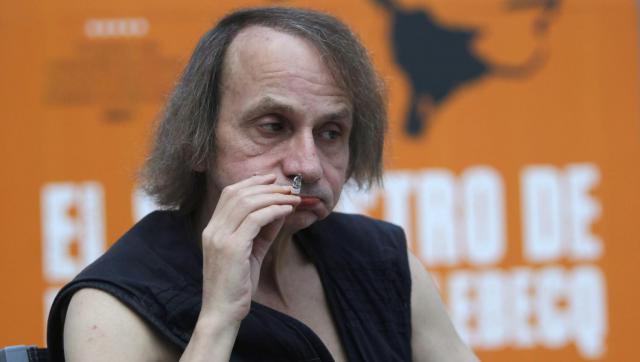
Michel Houellebecq needs a lighter |

Houellebecq was born on the island of Réunion in either 1956 or 1958. The product of a chaotically dysfunctional family, where his parents were largely absent from his upbringing and subsequently uninterested in his progress as a human being, he explains the confusion over his birthdate as the product of his deeply unreliable mother forging a replacement birth certificate to allow him to attend school two years early, thus absolving her of any responsibility for looking after him. This demonstrates the beginning of the highly troubled relationship between the two that reached its apogee in 2008 when his mother published her account of events in his formative years, while engaging in a very public spat.

After school, Houellebecq attended agricultural college rather than university, which has effectively enabled him to play up to the stereotype of the gauche outsider, rather than a member of the French intellectual elite who were educated at one of les grandes écoles and published his first poems in 1985. His first book was an analysis of H. P. Lovecraft, Against the World, Against Life, but it is with the appearance of his debut novel Extension du Domaine de la Lutte in 1994 that Houellebecq’s importance as a writer becomes apparent.

In his late 30s and working as a computer administrator for the National Assembly, Houellebecq initially appeared as an unlikely spearhead for any new cultural movement, when fame was thrust upon him after Extension du Domaine de la Lutte became not just a literary phenomenon, but a philosophical one, admittedly within the rarefied world of French scholarship, in terms of the message the book appeared to transmit. A nameless, bored computer programmer from the faceless Parisian banlieus is seconded to visit small towns, for the purpose of delivering IT software courses to local civil servants, who have neither the aptitude nor interest to take on board what he is telling them. He is accompanied by a work colleague he despises, who spends his leisure time attempting to lose his virginity aged 28, while the narrator gets incoherently drunk. Eventually the work colleague kills himself in a drunken car crash and the narrator, acerbic, misanthropic and dissociated to the end, returns to his original job just before Christmas, which he refers to as December 25th.

To attempt to restrict the intellectual parameters of this work by imposing the title Whatever on it, is a kind of anti-intellectual vandalism that has not been seen since the era of the Luddites. Extension du Domaine de la Lutte creates the world in which Houellebecq continues to inhabit; unsuccessful, defeated middle-aged men living in squat apartments among swathes of faceless, grey apartment blocks in the exurbs of a version of Paris utterly at odds with the romance and glamour of most literary representations. It is existence rather than life. Even George Orwell invested a sense of hedonism in his depictions of Parisian poverty in the late 1920s. Houellebecq’s version of Paris can be compared to Bukowski’s take on 1950s and 1960s Los Angeles; Hollywood and Sunset Strip are utterly absent from his narrative, which is centred on the interior of a sorting office, dive bars and low-rent apartments.  Houellebecq’s characters are not bon viveurs or epicures; their diet almost exclusively consists of top of the range microwav meals from neighbourhood mini supermarkets, while the daily routine of getting drunk is just what they do after work, when they’re not jacking off to pornography. Again, this hints at Houellebecq’s other similarities with Charles Bukowski. In the same way that Bukowski bases his main character, Henry Chinaski, on an idealised or expanded version of himself, the first person narrator in six of Houellebecq’s works of fiction can be seen a representation of the author, to a greater or lesser extent.

Has Michel Houellebecq lost his teeth? - Quora

Houellebecq’s second novel, Les Particules Élémentaires  published in the English-speaking world with the brutal and inadequate title  Atomised in the UK, and the vastly superior The Elementary Particles in the USA, was a breakthrough, bringing him national and eventually international fame, as well as provoking controversy for its intricate mix of  social commentary and passages of graphic depictions of sexual acts, written in a consciously anti-erotic style. Written in the third person, the book narrates the fate of two half-brothers: Michel Djerzinski, who became a prominent biologist, highly successful as a scientist but utterly withdrawn and depressed, and Bruno Clément, a French teacher, deeply disturbed and obsessed by sex.  

The brothers’ lives are not treated consecutively or concurrently, but elliptically. Bruno retreats to a psychiatric hospital after the death of his life partner and drops out of the book, while Michel responds to the death of the woman who loved him for almost 30 years by taking a job in a research laboratory on the very edge of the Wild Atlantic Way, in Clifden, County Galway. Here, as we learn in postscript, Djerzinski engineers human DNA in a way that turns the species into immortal neo-humans. Unlike many of his later works, in which he has been accused of peddling Islamophobia, misogyny or racism, the main criticism of Les Particules Élémentaires  is that it is a manifesto for eugenics. Plainly, this is not the case; the novel mainly focuses on metaphoric representations of the dual sides of human nature, in a kind of Jekyll and Hyde way. The difference being that neither the sensual hedonism of Bruno nor the scientific detachment of Michel offers any protection against the inevitable passage of time and the unbending pressure of society’s requirements.

It would be more accurate to describe Houellebecq’s next work, Lanzarote, as a novella, as it only extends to 84 pages. This is not to underestimate its importance, as the ideas within provide much of the plot and ideas contained in both Platform and The Possibility of an Island. Houellebecq touches upon sex tourism, with detailed, dispassionate descriptions of graphic sexual acts involving a German lesbian couple who, in a telling minor aside, the narrator fails to contact on returning home, having inaccurately recorded their telephone number. The other character, a slightly pathetic, lonely and defeated Belgian, leaves the island without warning after completely failing to impress the endless series of women he has failed to seduce. The narrator is surprised to see the Belgian on the television news, revealed as part of massive child sexual abuse case that involves a sinister quasi-religious cult, which is loosely based on the Raelians. Lanzarote may be a minor work, but Houellebecq’s later career points to its relevance.

Certainly, his next novel, Platform, is a ruthless and excoriating take on tourism in general and sex tourism in particular. It is unique among Houellebecq’s works in its deliberately comic depictions of a gauche and socially inadequate set of tourists, including the narrator describing his holiday attire of a Radiohead t-shirt and long shorts as being proof of how “pathetic” he is. The fact that the repeated depictions of sex acts with prostitutes do not provoke reactions of disgust in the reader, suggesting that the commodification of all personal relationships affects us all. The real point of contention in this novel are the numerous voices who have accused Houellebecq of rampant Islamophobia in this novel, and in his later work, Submission.

The question of the actual existence of Islamophobia is one that can be answered only with reference to the specific social and cultural conditions of particular counties. In England, as opposed to Britain, the continued prevalence of a dominant Oxbridge elite that retains control of the Law, the Press, Parliament, the Military and most of the top Universities, has enabled a narrative based on the attitudes that became ingrained after the Glorious Revolution and were reinforced by the Empire, to retain cultural control. The Church of England, as an institution, has little if any influence on the morals and ethics of the ordinary populace, but the many tentacled hydra of the British Upper Classes, extends its influential power over all aspects of society. Any belief that is not the Anglican Communion is regarded as, by definition, morally and intellectually inferior. This mindset continues to stigmatise all other religions. Non-conformism is the faith of the Valleys and the coalfields. Catholicism is the amoral refuge of drunken, violent Irishmen. Judaism has not gained a better press since Shylock’s day. Other non-Christian faiths are the preserve of savages and slaves. Islam is seen as the modern Catholicism; the preserve of violent insurgents, dedicated to the destruction of Britain. Islamophobia is therefore an institutional prejudice, harboured and encouraged by those who maintain the legal, cultural and financial infrastructure of society. This is not the case in France.

Despite assumptive British ignorance to the contrary, France has not effectively been a Catholic country since 1789. The refreshingly anti-clerical nature of the Revolution was demonstrated by the Declaration of the Rights of Man and the Citizen that stated “Every citizen may, accordingly, speak, write, and print with freedom,” though this was followed by the ominous caveat that each citizen “shall be responsible for such abuses of this freedom as shall be defined by law.” Following the execution of Louis XVI in January 1793, the dechristianisation of France gathered pace, as the ideas of the Enlightenment took hold. Despite the Reign of Terror and the efforts of Napoleon, the seeds of atheism took hold in France. In 2005, 45% of French citizens identified as atheists; while this figure had dipped to 29% in 2015, a further 62% regarded themselves as non-religious. The only reason religion has not died in France is the arrival of Francophone African citizens, who have both maintained a residual level of Catholicism and created an exponential growth in the number of French Muslims.

Significantly, many of those arriving in France have taken low-paid jobs and moved into the poor-quality housing of the outer banlieus in Paris and other major towns, creating ghettoization in the very areas Houellebecq situated his disaffected and disenfranchised characters earlier in his career. Without a doubt, Houellebecq has been responsible for provocative and inflammatory comments on Islam, but unlike the utterings of the barely literate Marine La Pen or the coarse bigotry of the Far Right in England, his words should be seen not as sloganeering, but as a part of the general public discourse that repeatedly shows he is a product of the French culture of anti-clericalism and semi Socratic outpourings on vaguely formed theories.  In short, Houellebecq has often participated in the typically French philosophical activity of thinking out loud, and in public, where he is asking himself the hard questions and challenging others to answer for him.

From provocative opinions, to provocative artistry, Hoellebecq moved on to the challenging Possibility of an Island. The book contains three different narrators (Daniel 1, Daniel 24 and Daniel 25), the latter two being neo-human clones who live thousands of years in the future, in a post-apocalyptic, arid landscape, populated by a few thousand “savages,” as well as the anatomically perfect and hyper-resilient, cloned neo humans. The latter narrators, at the point of creation, have the full biography of Mark 1, a bitter, cynical and deeply offensive Jewish stand-up comedian from the turn of the millennium, who was cloned by an Elohimite acquaintance, to study and internalise. The Elohimites are based on the Raelian cult, who spend their entire time seeming to worship alien life who they expect to land on Lanzarote and fleecing gullible billionaires for all their wealth. 

Unfortunately, the book doesn’t really work for the first half; possibly because Daniel 1 is so unpleasant. However, once we realise Daniel 1’s narrative is the biographical account all subsequent Daniels are required to study, the structure begins to make sense. Daniel 25 leaves his home in what used to be Barcelona, to walk to Lanzarote, following an event called “the Great Drying-Up” as the book is by turns poignant and affecting, but never less than fascinating. It is undoubtedly Houellebecq’s most experimental, though least successful, work.

In The Map and The Territory, a photographer becomes fabulously wealthy by taking pictures of French Ordnance survey maps and expanding the photos to incredible sizes, producing beautiful and unsettling effects. One of his devotees is the character of Houellebecq, at that time resident in Ireland, who agrees to write the text of the catalogue for another show. Unfortunately, Houellebecq is unexpectedly and brutally murdered. Perhaps the most intriguing innovation is the use of large sections of Wikipedia, used without comment as descriptions in the book. The effect is intentionally comedic, as the absolute and utter lack of opinion in these mundane passages becomes almost surreal with the repetition of this bland style of reportage. This fits with the consciously distant third person narrator, to make it Houellebecq’s most obviously stylish novel to date, but it pales into insignificance when compared to the profoundly cerebral Submission, which was ironically launched the day of the Charlie Hebdo shootings.

Set in 2022 amidst a backdrop of an imagined domestic political crisis, whereby the Front National are deadlocked with the Muslim Brotherhood in a French presidential election, Submission is undoubtedly the most stylishly written of all Houellebecq’s novels. A possible explanation for this is that the narrator, Francois, is a professor of literature at Université de la Sorbonne Nouvelle. Though while he is eloquent, measured and conservative in his expression, this is seen as a weakness because he is unable to speak up or speak out in dangerous, unpredictable times. Indeed, Francois is the first of Houellebecq’s protagonists to begin his tale in late middle age, rather than during his putative mid life crisis. Unsurprisingly, Francois views himself as a failure in his personal and professional lives, no longer able to maintain a relationship nor produce academic work of merit. However, this is not simply a story of angst among the aged; it is a subtle exploration of morality and betrayal.

Unlike in various interviews, or through the words of his narrators in Lanzarote and Platform, Houellebecq does not denounce Islam at all in Submission; instead the transformation of bourgeois, academic, intellectual France, and especially the capital, into an Islamic Republic under Sharia Law is described in restrained terms. When the entire professoriate is summarily dismissed, it is made clear they will be employed again, if they convert to Islam. The inducement to do so is not a monetary one, but the promise of a 15-year-old Arab girl as a trophy bride. Under French law, while a girl of 15 is still a minor, she is able to give consent to sex.  Typically, Francois fails to adhere to any principles, which makes the reader more judgemental in tone than his previous actions deserve.  Again though, Houellebecq’s novel springs from the anti-clerical, questioning culture of French intellectualism, where ruthless ambition is seen as a more serious character flaw than the sexual abuse of underage girls. Undoubtedly, Submission is a difficult and at times painful read, but it asks essential questions of our society. Hence, its impact upon French consciousness is significantly greater than in other countries who have a differing cultural narrative and discourse.
 Atomised | Wellreadweare's Blog

In contrast, Houellebecq’s latest novel, Serotonin, contains some of his most gratuitously offensive and vacuous writing, specifically uncomfortable references to his former girlfriend’s pornographic film career, where she specializes in group sex with dogs. The ludicrously named narrator, Florent-Claude Labrouste, is a depressed, middle-aged civil servant, who has a pointless job that involves trying to promote cheese from Normandy in France. Having decided he has failed in life (we’ve been here before…), he decides to simply disappear, ending up resident in a holiday cottage owned by a friend of his from agricultural college days, Aymeric. He is an alcoholic whose farm is on the verge of bankruptcy. After his family desert him, he attempts to start a rural insurrection against government policies, but instead shoots himself when confrontation with the authorities grows near. His senseless death provokes nothing in Florent-Claude, other than a decision to move back to Paris and live in a hotel, in obscurity.

The plot may appear to be both transparent and risible, but Houellebecq’s experience in constructing such novels of regret and disappointment has honed his craft. We genuinely pity the narrator’s plight and can almost sympathise at his insane plan to win back a former girlfriend by killing her son, though thankfully he decides against such a course of action. Undoubtedly, Houellebecq is now firmly in the grip of his own late middle age crisis. His twin influences of pessimism and social conservatism mean his novelistic concerns are narrowing, but with the trade off that his writing has become forensically detailed and curiously affecting. Is this enough to compensate for his lack of a sense of wonder? A younger reader than I would need to answer that.

Of course, while this may be the end of Houellebecq’s fictional journey so far, there are other items out there and, armed with the zeal of an obsessive completist, I ventured through Ebay and Discogs in search of obscure artefacts. At the time of writing, Houellebecq’s paean to HP Lovecraft, Against the World, Against Life, has yet to be delivered, though I have made my way through two other books. Firstly, Public Enemies is the entire 2008 correspondence about ethics, moral, politics and society that Houellebecq enjoyed with the notable French intellectual Bernard-Henri Levy. Across 300 semi-enlightening pages, they play a kind of ideological ping pong, introducing more and more preposterous theories and showing off their literary and cultural knowledge, rather in the manner of small, precocious children throwing a hissy fit because nobody is paying them any attention. It is, frankly, an inessential purchase. The same cannot be said of Unreconciled, a selection of Houellebecq’s poetry, translated into English. In the main, other than regular diversions into provocative showboating, such as My Dad was a solitary and barbarous cunt, Houellebecq’s poetry is a series of terse, epigrammatic observations on the human condition. It must be conceded that in most instances, endless screeds of short, depressive homilies to decay, failure and loneliness do not provide any great philosophical insights, though there are the occasional passages of truly persuasive writing, such as -:

“We may not live, but we get old all the same
And nothing changes, nothing. Neither summer, nor things.”

Finally, there is the question of Houellebecq’s musical adventures. His first effort, Le Sens du Combat (1996), was the recitation of some early poems over a musical backing provided by the composer Jean-Jacques Birgé. As the cheapest version I found online was £147, I decided I could live without it. I am also living without Établissement d'un ciel d'alternance (2007), Houellebecq’s most recent recording, again in collaboration with Birgé, as it is stuck in the post with the Lovecraft book; don’t worry I will return to them in due course. I am delighted to say that I have taken possession of Houellebecq’s 2000 recording, Presence Humaine and I’m very glad to have done so.

Houellebecq doesn’t sing; instead he solemnly declaims his poetry in a voice that is sometimes sombre, but oftentimes contemptuous, over a mid-70s style jazz rock backing band who sound like Brand X on lithium for the first seven tracks. The last three see him accompanied by a kind of cerebral synthpop backing that sounds like an enthusiastic amateur with a yen for Blancmange or Yazoo. As someone with a decent comprehension of written French, but only a rudimentary knowledge of the spoken version, I am more at home with the sleeve than the libretto (stop it!), in terms of comprehension. It is difficult to connect with the package either in isolation or totality. However, there are two superior cuts that hit the mark; when the band pick up the pace and start to drive, while Houellebecq breaks off from his bad impersonation of Bryan Ferry on A Song for Europe, to spit bile on the opening title track and the final ensemble number, Plein été. These tracks justify the purchase, thankfully for a tenner and not £147.

So, while I await the delivery of a final book and CD, I mark the days off the calendar until On Schopenhauer is published. Once that is out of the way, I may allow myself to move on, though each subsequent Houellebecq novel will certainly prick my attention, pausing only at this point to say he isn’t a French literary messiah, but just another very naughty post-modernist boy.



Monday, 20 April 2020

Blood & Sand

The Tories, the Cops, the Labour Party, Newcastle United and the continuing spectre of COVID-19. Life really is shit...

Saudi PIF rebrands entertainment subsidiary and appoints CEO ...

Last Thursday evening, heading home after my hour of Government approved recreational cycling, a sudden tumult of applause, pot banging and car horn manipulation filled the air. It was, I soon realised, not an attempt at recreating Chairman Mao’s famed and failed 1958 Four Pests Campaign to dissuade sparrows from eating the rice crop by means of a peasant created cacophonous din, but the weekly unspontaneous public outpouring of affection for front line workers, including NHS 111 call centre drones I presume.

There have been three such instances of quasi-organic support plus, I am led to believe, a “get well Boris” event that I also did not take part in. Thankfully, Ben Fogel’s mooted mass singalong of “Happy Birthday” to Elizabeth Windsor on the 94th anniversary of her parasitic existence, presumably mooted when he was once more hepped up on goofballs, isn’t going to take place. Indeed, Mrs Windsor has asked that the usual salute from state cannons is cancelled this year. Pausing only to mention that I could have imagined a far more creative use of weaponry and the Royal Family, we return to the tacky lauding of the NHS.

The reason I don’t join in with such eulogistic vacuity is not that I’m a miserable begrudger (well I am, but that’s not why), but because I hate how the Tories have accidentally stumbled on a way to turn the NHS and, by extension, the future funding of all health and social care, into a charity. Of course it is amazing that 99 year old Major Tom Moore has made over £17m for the NHS by doing a sponsored walk round his garden, but it makes me ashamed that we are not stopping to question why such a donation is a crucial part of the fiscal armoury required to repel the COVID-19 pandemic, rather than a luxurious bonus. Don’t even mention the appalling idea of flogging NHS lapel badges for £8.99 to care workers making £8.21 an hour.

To anyone with a shred of human decency, the solution to the crisis of underfunding in the NHS that 10 stinking years of chronic and cruel austerity have caused, can be found in the current slogan of the Peace Pledge Union: healthcare not warfare. Stop the arms race by immediately ceasing all defence spending and save human lives by pumping cash into front line services and viral research immediately because, as far as I can see it, 3 week extension notwithstanding, we're not going to get out of this lock down until there's a vaccine in place, which won’t be any time soon. You do realise that it’s a racing certainty there will be no gigs, no football, no pubs and no cricket until 2021. Even once there is some kind of preventative medication available to combat COVID-19 who is to say the vaccine will be automatically provided for everyone? We’re living under capitalism remember; undoubtedly there will probably be an arbitrary maximum age limit for mandatory dosage. In a grotesque re-enactment of Logan’s Run or Brave New World, I can easily imagine there will be a supposed utilitarian decision not to provide the vaccine to those either too old or infirm to make a positive contribution to future economic recovery. Will eugenics kick in at 70, 60 or on a case by case basis?

Don’t kid yourselves that the medical profession will prevent this from happening, as the distribution of vaccines won’t be on their watch. The way things are going, unless the general public wakes up to the fact, we are becoming a dictatorship by stealth, for supposed reasons of the greater good, the Police will continue their unfettered lust for coercive power by overseeing distribution of lifesaving medication. Incidents such as the Accrington confrontation, where appalling threats to fit an innocent bloke up were issued by one crazed thug and tacitly supported by his cowardly colleagues, are only the tip of the current iceberg and will soon resemble the new community policing unless increasingly bellicose chief constables are called to account.

Mind don’t expect much in the way of moral guidance from the ruling Tory Party at this or any other time.  The longer the current crisis continues; the more obvious it is that the scale of the disaster is entirely the fault of the complacent, indolent response of the cabinet back in January and February. While still only admitting that coronavirus is responsible for the 16,000 (at the time of writing) deaths in hospital, that figure is presumed to be less than 60% of actual deaths from the virus when fatalities at home or in care are factored in. Additionally, there are those COVID-19 deaths that have been recorded as of natural causes, because of the continuing inability of the Government to test in any semblance of an adequate fashion.

Without putting to fine a point on it, this is entirely down to the Tories complacently sitting on their overstuffed, purulent arses for 38 days following the first COBRA briefing on January 24th, rather in the same way that patriotic Brexiteers utterly refused to lend a hand in the fruit and vegetable picking crisis that resulted in nigh on 5,000 Romanian workers being flown in to stop the country starving. When all credible scientific advice pointed to the probable need for lockdown, Johnson poo-pooed the imminent crisis, took a fortnight’s holiday in his grace and favour rural pile and missed 5 successive COBRA meetings. Living under lockdown isn’t great fun, but if the Tories had faced up to their responsibility to the very citizens who had returned them to power with an enormous majority not two months previously, rather than allowing the satanic shithouse Cummings to browbeat the timorous and incompetent elected Cabinet into accepting the presumed 60,000 plus deaths that herd immunity was supposed to require, then allowing the vast majority of the public to believe coronavirus was only like a bad case of the flu and regular handwashing would kill 99% of all known germs, we could have been well on the road back to normality. I know for a fact I was reassured into believing this was a 9-day wonder, no worse than 2009’s Swine Flu outbreak. How wrong I was; how wrong they were. Now, their arrogant stupidity that seems like a revisiting of the conduct of the French Royal Family in the latter part of the 18th Century, will undoubtedly mean that deaths in Britain will probably be double Cummings initial estimate and that human life will not return to any recognisable pattern for at least another 12 months.

There is, thankfully, much scrutiny of Johnson’s role being undertaken in the quality press, even if such pointed criticism is only in the public domain because the loathsome Barclay Twins are keen on replacing BoJo with the unspeakable glove puppet Gove as their chief errand boy. The Home Office’s extraordinarily detailed and sulky response to The Sunday Times excoriation of Johnson’s conduct read like an angry teenager’s diary entry the night they got dumped by their first love. This story has got legs...

In the last days of his position as leader, the largely discredited Jeremy Corbyn fired off some pretty stinging body shots about our “part time PM” and his role in ending or risking the lives of so many people as live in a city the size of Bristol of COVID-19. Now Corbyn has gone and Keir Starmer has replaced him. Ignoring Starmer’s less than revolutionary economic and social beliefs, he has the brains and eloquence to wipe the floor with the Tories with a forensic analysis of their desperate mishandling of the crisis, should he wish to, as this may actually buy him some time with the rank and file of the party, many of whom are furious with the revelations of treacherous duplicity by senior Labour figures during the 2017 election.

Without question, one of the major weaknesses, indeed his number one character flaw, that Corbyn displayed during his tenure of the role of leader was an apparent indifference to accusations of antisemitism within the party as a whole. The 860 page internal report leaked by The Guardian has concluded that Corbyn’s indifference was only a contributory factor in the failure of the Labour Party to address this issue, with real damage being caused by deliberate and orchestrated sabotage by those opposed to Corbyn on an ideological basis, stating  there was an “abundant evidence of a hyper-factional atmosphere prevailing in party HQ in this period, which appears to have affected the expeditious and resolute handling of disciplinary complaints”.

It also states that “many staff … were bitterly opposed to the leadership of Jeremy Corbyn, and seem to have been demotivated, or largely interested in work that could advance a factional agenda … some employees seem to have taken a view that the worse things got for Labour the happier they would be, since this might expedite Jeremy Corbyn’s departure from office.”

Further, the report contains several leaked WhatsApp messages that show many senior officials were hostile to Corbyn when he took over, with references to Corbyn-supporting party staff as “trots”, conversations referring to former director of communications Seumas Milne as “Dracula”, and that he was “spiteful and evil and we should make sure he is never allowed in our party if it’s last thing we do”. There were also mentions of Corbyn’s former chief of staff Karie Murphy as “medusa”, a “crazy woman” and a “bitch face cow” that would “make a good dartboard.”

Frankly, it disgusts me that the top echelons of the only mass party for workers in this country has been systematically undermined by those either in Parliament, who benefitted from the organisation and help of some many unpaid activists, or those on the actual payroll. Instead of turning their guns on the Tories, they embarked upon a plan to destroy the party’s election chances from the inside, resulting in the Tories being returned to power and their implementation of yet more vicious austerity that leaves the NHS in the state it is now. That said, from the benefit of several years distance, if such conduct means the loony Leninists from Maomentum or the Corbynista cult of armchair, 280 character revolutionary bullshit artists who’ve never delivered a leaflet or knocked on a door in their life, leave the Labour Party, only their money will be missed.  If those who remain decide to coalesce around the snippy, mortgage messiah Ian Lavery, then there’s absolutely nothing to worry about. We can make our way through this crisis within a crisis with our dignity intact and sense of moral rectitude repaired.

Saudi names head of PIF as Aramco Chair as a decentralization push

This is not the case with Newcastle United, I fear. Despite the routine wall of silence from SJP, it appears that a takeover is realistically in the offing, mainly because Ashley is a bit nervous about being short of readies if the lockdown continues, as he’s been told he can’t pretend Sports Direct stores are essential frontline services. Ergo, the magic £300 million tipping point for any deal appears to have been reached. Long thought to have been discredited as a shallow-pocketed fantasist, Amanda Staveley is in for 10% of the deal. All well and good, though I do have reservations about the fact she smokes as it makes her look common, except for the fact she is borrowing this money from Ashley, on the back of an ongoing megabucks legal action against Barclays Bank. I’m unaware of the ins and outs of the case, but it appears she’s considered an odds-on favourite to come out of this smelling of roses. Two cheers for her. Also weighing in with 10% are the benevolent billionaire property and retail entertainment magnates, the Reuben Brothers, who own large swathes of Newcastle city centre. Shame they’re not making much from all the bars and restaurants under their control just now. And then there’s the camel in the room; if this all goes to plan, the Public Investment Fund of Saudi Arabia (PIF) will own an 80% stake in the club.

Alright, let’s be honest, Mike Ashley’s 13-year tenure of Newcastle United has been a disaster. Two relegations from the Premier League, a lack of care in the fabric of St. James Park allowing the ground to decline into one big scruffy advertising hoarding for Sports Direct with 52,000 seats, a series of inadequate managers and players, as well as an utter refusal to communicate in an honest and open way with a hideously divided fan base who have been at each other’s throats since Bobby Robson left the club; not the greatest of CVs it has to be said. However awful an owner and an employer Ashley has proved himself to be, and this is the crucial bit, he has not stoned women to death for having sex outside of marriage, nor has he executed gay men by throwing them off high buildings, nor has he engaged in the ritual execution by beheading of petty criminals. Saudi Arabia does. And that’s precisely why, if this deal goes through, I’ll be even further distanced from the club than I am now. In all conscience, I cannot give my support to a regime that is responsible for daily breaches of their population’s human rights. When said regime assumes almost total control of my football club, it is time to take a stand and say no.

Okay, I’ve made this point on Twitter several times and the response has been split in three ways. Firstly, and I must say this is the least common reply, people have agreed with me and say they are more than uncomfortable with the idea of a medieval dictatorship pouring blood money into our club. They, like me, see that Newcastle United will be morally diminished by this takeover and fair game for any criticism that comes the club’s way. Unfortunately, morality means we’re stuck with Brooooth in the dugout and Joelinton up top. It reminds me of canvassing for the Labour Party when Michael Foot was leader.

Secondly, we have the pragmatists, who range from the apolitical elements who will go to the game in their replica shirts and cheer the team on, even if Ashley appoints John Wayne Gacy as head of youth development, to the earnestly philosophical. These are the people I disagree with, but who are able to defend their stance in a logical and erudite manner. To summarise, they argue that while intervention from the House of Saud is a serious publicity error, what other way do we have of taking back our club? They accept that PFI are at best questionable owners, but that their conscience, either clear or weighed heavily down, has absolved them of any doubts; being taken over is undoubtedly better for Newcastle United than being a neglected also-ran in Ashley’s stable of shabby businesses. I’d agree with them in almost any circumstances than this.

Thirdly, and most tiresomely, we have the majority, who seem to welcome this takeover, indeed any takeover, as it removes Ashley’s hand from the tiller, regardless of any other considerations. We have either the chuckleheaded clowns who’ve been constructing TikTok videos of Arabs dancing to The Blaydon Races, or flooding social media with selfies where they’re attired in tea towel, sunglasses and NUFC shirt. If they are kids, hopefully they’ll grow out of this infantilist stage, but if they are adults, they are probably beyond redemption. At least such useful idiots don’t provide much of an intellectual challenge, even if their noise is deeply irritating.

Finally, we have the zealots, who’ve come out fighting from the start. They simply do not accept that any Newcastle fan would be anything other than ecstatic about the takeover. I envisage these to include a large number of shaven headed men in their 40s, attired in chunky Italian designer knitwear, who use Raffertys on Pink Lane as base camp. Confrontation and aggression are their touchstones; anyone stating a different opinion on social media may be told at the outset to fuck off, followed by accusations of paedophilia. If this does not happen, any debate follows a depressingly predictable course; fans of other clubs are assumed to be jealous hypocrites, fans of Newcastle are traitorous hypocrites and journalists are avaricious hypocrites. If you further engage in debate, the endpoint will be marked by being told to fuck off, followed by accusations of paedophilia. The block button then becomes the only possible way to prevent further escalation, in the shape of the preparation of an on-line bonfire and the waving of cyber scythes. I can not and will not respect such a blinkered and unthinking response, though it does amuse me that so many of the pro PIF faction are previously unapologetic Islamophobes and ardent Brexiteers, who now find themselves standing in solidarity with a regime that enforces Sharia Law with murderous inflexibility. I genuinely fear for the future of Newcastle United, not as a football team, but as a football club.

That said, my Government approved 60 minute pedal on Saturday took me past my beloved Tynemouth Cricket Club, where I ought to have been celebrating the start of the new cricket season by watching the firsts take on last season's champions Burnmoor and the thirds, just over the fence, if their opponents, whoever they were, managed to turn up. Sadly, the COVID-19 pandemic has resulted in an indefinite postponement of the cricket season, which pains me grievously. All we can hope is that conditions become safe enough so as we can watch and play the greatest game on earth sometime soon, but I seriously doubt that will be the case as the effect of those 38 days of indolence continue to haunt, punish and limit us.


Scene 1: To the soundtrack of Largo from Symphony No. 9 in E minor, From the New World by Antonín Dvořák, a middle aged man in cricket whites and an NCB style donkey jacket, emblazoned instead with a BUPA logo, emerges from the grand entrance of a palatial home in an exclusive suburb. The day is brilliantly sunny as he grimaces while scanning the heavens, before pulling his donkey jacket tight round his throat, allowing us to see the badges on his lapels display Vote Jeremy on one side and FC St Pauli on the other, before he sprints towards a sleek, German 4x4 and drives rapidly away. The crunch of gravel and screech of tyres can be vaguely discerned over the music.

Scene 2: The middle aged man from scene 1 is seen wheeling his cricket kit bag from the car to the pavilion, where he sets it down, before running with his donkey jacket over his head from the boundary to the square where a crowd of half a dozen other middle aged men, either brandishing outsized golf umbrellas, or attired in sou’westers and oil skins stare grimly into the azure blue sky and blinding sun, muttering and shaking their heads. Almost immediately, they wheel protective covers over the wicket and head towards the boundary.

Scene 3: The 7 middle aged men, divested of outer garments, sit pouring bottles of beer, exchanging laughs and back slaps inside the pavilion, while picking from a trestle table laden with buffet food (pork pies, sausage rolls, sandwiches, cake and other treats). The camera focuses on first middle aged man who speaks directly to the camera, while offering his beer glass in a toast, as the music comes to final crescendo -:

Rhethreg Gwyllt; dyma'r un y mae'n rhaid i chi alw gemau amdano.”

END